
Memorial Pots for Graves: Resource Guide
Choosing a memorial pot is a quiet, personal decision. The right option should feel dignified, suit the cemetery’s rules and hold a tribute securely through changing UK weather. This guide explains the main materials, practical ways to choose a pot or vase, and how to create a lasting arrangement with care.
We will cover the main materials, granite, bronze, aluminium, concrete, plastic, ceramic, and talk about where to buy ready-made vases. You will also learn how to build your own pot, arrange flowers that last through rain and sun, and personalise the final tribute. By the end, you will have a clear plan. Let us get started.
Types of Memorial Pots by Material
The material you choose is the single biggest factor in how long your memorial pot for graves will last. It also determines the look, the weight, and the cost. Here is a breakdown of the most common options.
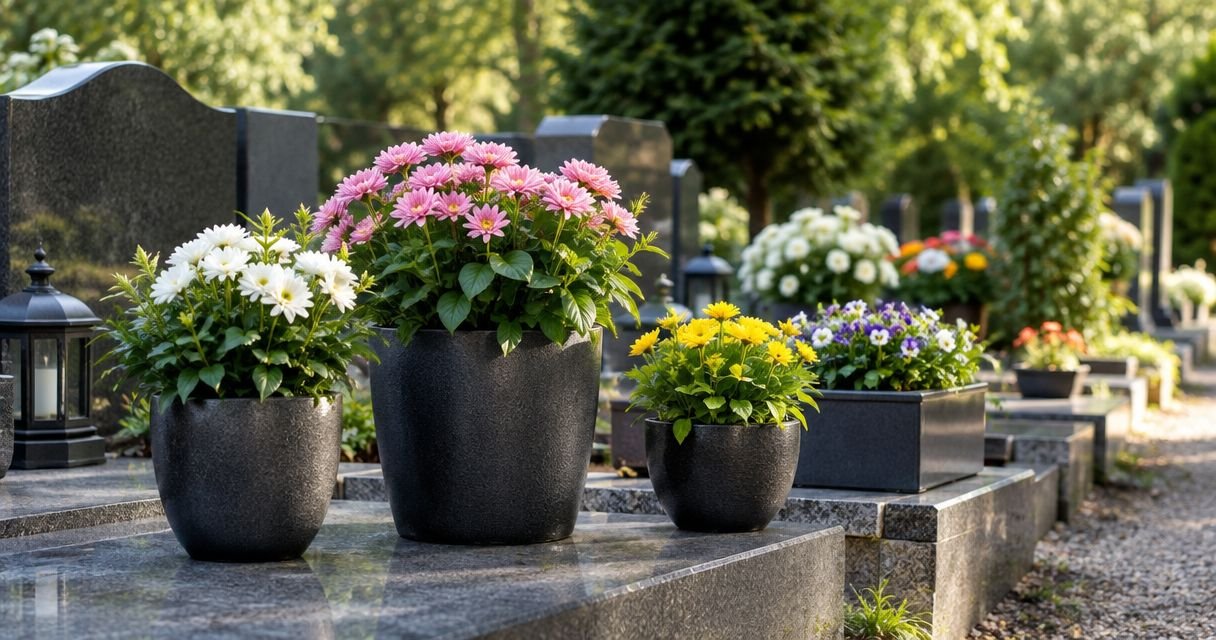
Granite
Granite is a long-lasting choice that complements many headstones. Its weight can help it stay steady in exposed areas, while a polished finish is easy to keep presentable. As with any permanent vase, check the cemetery’s requirements and ask a UK memorial supplier about the size and fixing method that is suitable for the grave.
Bronze
Bronze has a traditional appearance and develops a natural patina over time. It can be a thoughtful match for a memorial with bronze details, but fittings and permitted placement vary between cemeteries. A memorial supplier can advise on compatible liners, fittings and current prices in pounds.
Aluminium
Aluminium is light and rust-resistant. It costs less than granite or bronze. You can buy an anodized finish that mimics bronze or pewter. But thin aluminium walls can dent, and the finish may fade after a few years of direct sun. Aluminium works well as a temporary or backup vase while you decide on a permanent option.
Concrete
Concrete can add useful weight to a pot, but it absorbs moisture and may crack in frost unless it is properly sealed. If considering a weighted DIY pot, first confirm that the cemetery permits it and choose a sturdy container with safe drainage.
Plastic and Ceramic
Plastic cone vases and stake vases are widely available from UK garden centres and memorial suppliers, often at a lower price than stone or metal options. They are useful for seasonal tributes, though strong sunlight and wind can shorten their life. Ceramic pots can look beautiful but need careful placement because they are more fragile in outdoor conditions.
A good rule of thumb: if you want the pot to look the same in ten years, go with granite. If you want to change arrangements often without spending a lot, plastic or aluminium can get the job done.
Bottom line: Your choice of material directly affects the durability, appearance, and long-term cost of your memorial pot for graves.
Where to Buy Ready-Made Cemetery Vases
If a ready-made pot or vase feels right, start with UK garden centres, memorial suppliers and the cemetery’s own guidance. Compare the material, dimensions, drainage and stability, and look for prices shown in pounds. For a complete floral tribute, explore our grave pots with artificial flowers and grave pots and cremation vases.

A simple engraved name plate, a favourite colour or a small weather-safe keepsake can make a memorial pot feel more personal. Before adding anything, check the cemetery’s rules on materials, height and items placed beside the memorial.
When comparing options, look for clear product details and choose a pot that suits both the grave space and the tribute planned for it. Our handcrafted cone flowers slip into any standard grave pot — see our Cone Funeral Flowers.
A well-chosen vase paired with a lasting artificial arrangement can create a dignified tribute with less frequent upkeep than fresh flowers.
Bottom line: The best memorial pot for graves combines a sturdy, long-lasting vase with a low-maintenance floral tribute that does not require price-hunting.
DIY Memorial Pots: Tools and Cost-Saving Tips
Making a memorial pot can be a meaningful way to personalise a tribute. Keep the design simple, stable and suitable for the cemetery’s rules. A sturdy planter, an appropriately sized floral-foam insert and carefully arranged artificial stems can create a neat, lasting display without unnecessary weight or mess.
Here is the step-by-step process:
- Choose the pot. Select a stable pot that fits the permitted space and allows water to drain.
- Prepare the base. Use a suitably sized floral-foam insert, secured so it cannot shift.
- Add greenery first. Arrange foliage around the edge to create a balanced foundation.
- Place the focal flowers. Add the larger blooms at varied heights, with the tallest stems toward the back.
- Finish gently. Fill small gaps with leaves or smaller flowers and check that every stem is secure.
A DIY tribute can give more control over the colours and flower choices, while a ready-made option may be more convenient. Compare current prices in pounds, then choose the route that feels manageable and appropriate for the memorial space.
If a ready-made option is preferable, choose a pot or vase designed for outdoor memorial use and pair it with a pre-made artificial arrangement sized for the opening.
Bottom line: A thoughtfully made memorial pot can be a personal, practical tribute when it is stable, permitted by the cemetery and designed for the weather.
Floral Arrangement Techniques for Grave Pots
The pot is the foundation; the flowers carry the meaning. Whether choosing fresh or artificial stems, a lasting arrangement benefits from a secure base, layered greenery and carefully placed focal blooms.
Step 1: Prepare the foam. If your pot came with a styrofoam insert, trim it so it sits about an inch below the rim. That leaves room for glue and stems. If you are using a concrete-filled pot, the top of the concrete is your base, push stems directly into it before it cures, or glue them on top afterwards.
Step 2: Start with greenery. Leather-leaf fern or boxwood stems are cheap and cover the sides. Dip each stem in hot glue and push it into the foam at an angle. Create a collar around the edge, this hides the foam and gives a natural arching shape.
Step 3: Add focal flowers. Choose 3, 5 larger blooms (roses, sunflowers, daisies). Place them in a rough triangle or cluster at the centre. Vary the heights: taller stems in the back, shorter ones in front. Hot glue every stem.
Step 4: Fill gaps. Use smaller blooms and single leaves to cover any bare spots. Glue them to the back of a larger stem if needed.
Step 5: Add a personal touch. A favourite colour, a small weather-safe keepsake or a discreet memorial card can add meaning. Check cemetery guidance before including lights, photographs or additional decorations.
For a lasting arrangement, we recommend high-quality silk flowers. They look real and resist fading. Stems From Heaven creates handcrafted silk memorial wreaths and arrangements that are weather-resistant and designed to stay beautiful for years. Their weather-resistant grave flowers guide explains how their materials hold up against UK weather.
Bottom line: A well-made floral arrangement for a memorial pot for graves uses hot glue, layered greenery, and focal blooms to create a full, weatherproof tribute.
Cemetery Regulations and Personalization Ideas
Before you buy or build a memorial pot for graves, check the cemetery’s rules. Many cemeteries limit the size and type of vases allowed. Common restrictions include:
- Height: Most cap vase height at 8 to 12 inches.
- Material: Some require stone or metal only; no plastic or glass.
- Placement: Vases must sit on the headstone base, not on the grass.
- Seasonal removal: Some cemeteries remove all decorations after a set date. Check before you invest in a permanent pot.
To personalise a memorial pot, consider a small engraved name plate or a discreet weather-safe tag with a name, date or short message. Choose a material suitable for outdoor use and confirm with the cemetery before placing it.
Another personal touch can be a small memorial card or a photo in a weatherproof frame, where the cemetery allows it. Keep any additions secure, discreet and easy to remove if seasonal rules require it.
Our handmade artificial arrangements can be chosen in colours and tribute styles that reflect the person being remembered. See our Artificial Flowers for Graves collection for lasting, dignified options.
Bottom line: Cemetery regulations often dictate the size and material of memorial pots for graves, but you can still personalise with engraved tags, solar lights, and custom silk flowers.
Eco-Friendly and Sustainable Memorial Pot Options
More families are thinking about the environmental impact of grave decorations. Traditional materials like granite and bronze have a large carbon footprint due to quarrying and smelting. Plastic vases contribute to microplastic pollution. Fortunately, there are greener alternatives.
Biodegradable pots. Some companies now offer pots made from natural fibres, coconut coir, or rice husks. These break down over time, returning nutrients to the soil. You can plant them directly in the ground. For graves, a biodegradable pot can hold a plant or a seasonal arrangement and will eventually decompose.
Recycled materials. Concrete can be made with recycled aggregate. Aluminum vases can be made from recycled cans. Look for products labelled “post-consumer recycled”.
Natural arrangements. Instead of plastic flowers, use dried flowers, pine cones, or live plants. Succulents and moss require little water and last for months. They also attract bees and butterflies, creating a living tribute.
For the pot itself, consider a durable option that will not need frequent replacement. For the flowers, a carefully made artificial arrangement can be a lasting choice for families who prefer less regular upkeep.
Eco-friendly doesn’t have to mean short-lived. With a well-chosen pot and a durable silk arrangement, you can honour the planet while honouring your loved one.
Bottom line: Sustainable memorial pots for graves include biodegradable fibre pots, recycled concrete vases, and durable silk arrangements that minimise waste over time.
Frequently Asked Questions
What is the best material for a memorial pot for graves?
Granite is the top choice for permanent, low-maintenance use. It resists weather, UV rays, and staining. Bronze is also very durable and develops a patina. If you want a budget option, concrete or heavy plastic with a concrete base works well. Avoid ceramic and thin plastic if you expect long-term outdoor exposure.
How do I keep a memorial pot from blowing over?
Add weight to the bottom. Fill the pot with concrete, large rocks, or sand. A DIY method: pour quick-set concrete into the pot, insert a styrofoam cone, and let it cure overnight. The pot becomes 10, 15 pounds and will stay put even in strong wind. For store-bought vases, choose granite or bronze, they are naturally heavy.
Can I put fresh flowers in a memorial pot for graves?
Yes, but they will wilt quickly, especially in heat or rain. You can use floral foam soaked in water to extend their life by a few days. However, many families prefer artificial flowers for a permanent, low-maintenance tribute. Silk arrangements from Stems From Heaven look realistic and last for years.
Are there size restrictions for memorial pots in cemeteries?
Most cemeteries limit vase height to 8, 12 inches. Some restrict materials to stone or metal only. Always check with the cemetery office before buying or building a pot. Violating the rules can result in the pot being removed. A quick phone call can save you time and money.
How do I clean a granite memorial pot for graves?
Use mild soapy water and a soft cloth, then rinse and dry gently. Avoid abrasive cleaners, which can mark polished stone or metal. Follow the supplier’s care guidance for the specific material.
Can I personalise a memorial pot with a name or date?
Yes. A small engraved plate, a favourite colour palette or a discreet weather-safe memorial card can add a personal touch. Check the cemetery’s rules before adding anything beyond the pot and flowers.
What is the cheapest way to make a memorial pot for graves?
A simple plastic pot with a secure floral-foam insert and carefully chosen artificial stems is often the most economical approach. Compare current prices from UK garden centres and memorial suppliers, and prioritise a stable design that meets cemetery rules.
Where can I buy a weather-resistant silk arrangement for a grave pot?
Stems From Heaven offers handcrafted silk memorial wreaths and arrangements specifically designed for outdoor use. Their materials are weather-resistant and hold colour well in sun and rain. They ship across the UK and offer customisation options. You can browse their collection on their website.
Conclusion
Choosing a memorial pot for a grave is a personal decision. The most suitable option balances the cemetery’s rules, the local weather, the available space and the type of tribute that feels right for the person being remembered. Granite, bronze, concrete and plastic all have different practical qualities, so take time to compare the choices available from UK suppliers.
A DIY tribute can be meaningful when it is kept simple: begin with a stable pot, build a neat base of greenery, add focal blooms and secure every stem. Always check the cemetery’s requirements before finalising the design.
For the flowers that go inside, we believe handmade silk arrangements offer the best balance of beauty, durability, and ease. They require no watering, no wilting, and no weekly replacements. Stems From Heaven’s weather-resistant silk funeral flowers are designed to bring lasting, dignified, elegant beauty to any grave. Whether you choose a ready-made pot or build your own, consider pairing it with one of their custom arrangements.
We hope this guide helps you find or create the perfect memorial pot for graves. Take your time, compare options, and choose what feels right for your loved one. If you have more questions, our team is here to help. Visit Stems From Heaven to explore our range of permanent grave flowers and memorial wreaths.