Flowers for a baby’s funeral: best choices 2026
Best overall: roses for a simple, adaptable tribute. Best for a gentle garden feel: daisies. Best for personal meaning: the child's favourite flowers. This 2026 guide compares flowers for a baby's funeral and a child's funeral, including fresh arrangements and lasting silk tributes.
- Roses are the best default flowers for a baby’s funeral when you want a simple, personal tribute.
- Daisies suit a gentle garden-style arrangement; forget-me-nots suit a small remembrance detail.
- A child’s favourite flowers or colours take priority over traditional flower meanings.
- Stemsfromheaven offers handcrafted artificial silk funeral flowers for families choosing a lasting tribute.
Why this matters
Choosing flowers after the death of a baby or child is deeply personal. You do not need to find a flower that explains the loss, and there is no required colour, shape or floral tradition.
Stemsfromheaven is an option for families seeking handcrafted artificial silk funeral flowers rather than a fresh tribute. Fresh flowers are equally valid; choose the material around your wishes and the venue's rules.
For arrangements in 2026, begin with the family's preferences rather than a conventional design. You can browse Stemsfromheaven for artificial funeral tributes, but confirm the intended setting before choosing an arrangement.
What makes the best flowers for a baby's funeral?
- Personal meaning: A remembered colour, garden flower or family association matters more than a prescribed symbolic meaning.
- Suitable scale: Ask the funeral director about the space available. A small casket does not need a large tribute.
- A gentle focal point: Choose 1 main tribute first, then decide whether anything else is wanted.
- Material and setting: Decide whether the flowers are for the service, a home keepsake or a grave. These are different uses.
- Practical acceptance: Check rules on artificial flowers, floral foam, containers and anything attached to the arrangement.
- Family wishes: If you are sending flowers, ask before ordering. A request for donations or no flowers takes priority.
Flowers at a glance
These 6 choices serve different purposes. The ranking is a guide to selecting a tribute in 2026, not a rule about what a family should prefer.
| Flower choice | Best for | Standout quality | Key limitation |
|---|---|---|---|
| Roses | A simple default tribute | Work as a single-flower design or within a mixed arrangement | Traditional associations do not replace personal meaning |
| Daisies | A gentle garden-style tribute | Open flower shapes give a less formal appearance | Less suited to a tightly structured design |
| Forget-me-nots | A remembrance detail | Small blue flowers provide a recognisable memorial association | Small blooms are less prominent in a large tribute |
| Carnations | A closely arranged floral shape | Ruffled petals create a textured surface | Dense designs can hide individual flower shapes |
| Lilies | A formal, open floral tribute | Large blooms create clear focal points | Fresh pollen and fragrance need consideration |
| Favourite flowers | A tribute reflecting the child | Connect the arrangement to a real preference or memory | Need a known preference rather than an assumed one |
1. Roses: best for a simple default tribute
Roses are a practical starting point when you want a recognisable flower without choosing an elaborate shape. A rose-led arrangement can be restrained or colourful, depending on what feels right to the family.
There is no need to choose white automatically. Pink, yellow or another personally meaningful colour is equally appropriate.
Roses pros:
- Suit single-flower and mixed designs.
- Allow colour to carry personal meaning.
- Work without added lettering or decorative symbols.
Roses cons:
- A conventional design can feel impersonal without a thoughtful colour choice.
- Fresh stems need appropriate handling because of thorns.
Best for: Families who want a clear, uncomplicated starting point.
Verdict: Choose roses when simplicity feels more helpful than a themed tribute.
2. Daisies: best for a gentle garden-style tribute
Daisies suit an arrangement that feels closer to a garden posy than a formal display. Their open flower shapes remain visible in a loosely arranged design.
For a baby's funeral, a daisy-led tribute can stand alone. It does not need added toys or symbols to make it personal.
Daisies pros:
- Give an informal garden appearance.
- Keep individual flower shapes easy to distinguish.
- Pair naturally with a loosely gathered style.
Daisies cons:
- Do not create the same dense surface as carnations.
- A heavily structured base can work against the garden-style appearance.
Best for: Families who prefer an understated, less formal arrangement.
Verdict: Choose daisies for a garden-style tribute, not for a tightly packed floral shape.
3. Forget-me-nots: best for a remembrance detail
Forget-me-nots offer a direct association with remembrance through their name. Their small blue blooms make them a considered detail within a tribute rather than a dominant focal flower.
Use them because that association brings comfort, not because any flower meaning is compulsory. Ask how the small flowers will be positioned so they remain visible.
Forget-me-nots pros:
- Carry an understandable remembrance association.
- Add a small-scale floral detail.
- Suit a blue accent within a mixed design.
Forget-me-nots cons:
- Small blooms can disappear within a large arrangement.
- They do not provide the visual structure of larger flowers.
Best for: Families wanting a quiet memorial detail.
Verdict: Choose forget-me-nots as a visible accent rather than expecting them to fill a large tribute.
4. Carnations: best for a closely arranged floral shape
Carnations have ruffled petals that create texture when flowers sit close together. They suit designs where the outline of the tribute matters more than the visibility of each stem.
Choose the shape first, then discuss how much detail it needs. A simple outline can carry as much meaning as an elaborate design.
Carnations pros:
- Create a textured floral surface.
- Suit close placement within a shaped arrangement.
- Allow a restrained design without numerous flower types.
Carnations cons:
- Dense placement reduces the visibility of individual blooms.
- A shaped tribute needs careful agreement on its overall outline.
Best for: Families who have chosen a clear floral shape.
Verdict: Choose carnations when the tribute's outline is the main feature.
5. Lilies: best for a formal, open tribute
Lilies create focal points through their large blooms. They suit an open arrangement where the flowers have space, rather than a small design packed with many elements.
With fresh lilies, discuss fragrance and pollen with the florist. Keep fresh lilies away from cats: lilies are highly toxic to them.
Lilies pros:
- Provide distinct focal flowers.
- Suit a formal arrangement.
- Need fewer competing decorative elements to remain prominent.
Lilies cons:
- Large blooms need a proportionate arrangement.
- Fresh lilies require care around pollen, scent preferences and cats.
Best for: Families choosing a formal tribute with open space around the flowers.
Verdict: Choose lilies only when their scale and practical requirements suit the setting.
6. Favourite flowers: best for reflecting the child
For a child's funeral, a favourite flower or colour can be more meaningful than any traditional recommendation. A flower remembered from a garden, drawing or shared experience gives the design a personal starting point.
For a baby, use a family association if that feels right. There is no need to invent a preference or assign meaning to every detail.
Favourite flowers pros:
- Connect the tribute to a real memory.
- Allow colour choices beyond funeral conventions.
- Keep personal meaning at the centre of the design.
Favourite flowers cons:
- An assumed preference can miss the family's wishes.
- Multiple memories can make a design crowded if each becomes a separate element.
Best for: Families with a clear flower, colour or garden memory.
Verdict: Choose a known personal connection ahead of the default ranking.
Fresh or artificial silk flowers?
Fresh and artificial flowers serve different needs. Fresh flowers have a natural, changing appearance; artificial silk flowers retain their floral form but do not have the same texture or natural fragrance.
Stemsfromheaven sells handcrafted artificial silk funeral flowers and memorial tributes. That makes it relevant when you want an artificial arrangement, but silk alone is not evidence of suitability for prolonged outdoor exposure.
| Material | Main advantage | Main limitation | Best for |
|---|---|---|---|
| Fresh flowers | Natural petals and appearance | Need care and eventually wilt | Families who value fresh flowers for the service |
| Artificial silk flowers | Retain their floral form after the service | Outdoor suitability needs checking; not accepted everywhere | Families who want to keep an artificial tribute |
For a casket arrangement, agree the placement with the funeral director before choosing the flowers. The guide to casket spray flowers covers that format separately.
How to bring the choice together
Keep the decision manageable: choose a personal connection, confirm the tribute size, then check the venue rules. For arrangements in 2026, a florist or funeral director should confirm those practical details before you commit to a design.
If you want a restrained arrangement, start with 2 flower types and 1 short message. These are planning choices, not limits; leave out anything that does not feel right.
How the flowers are ranked
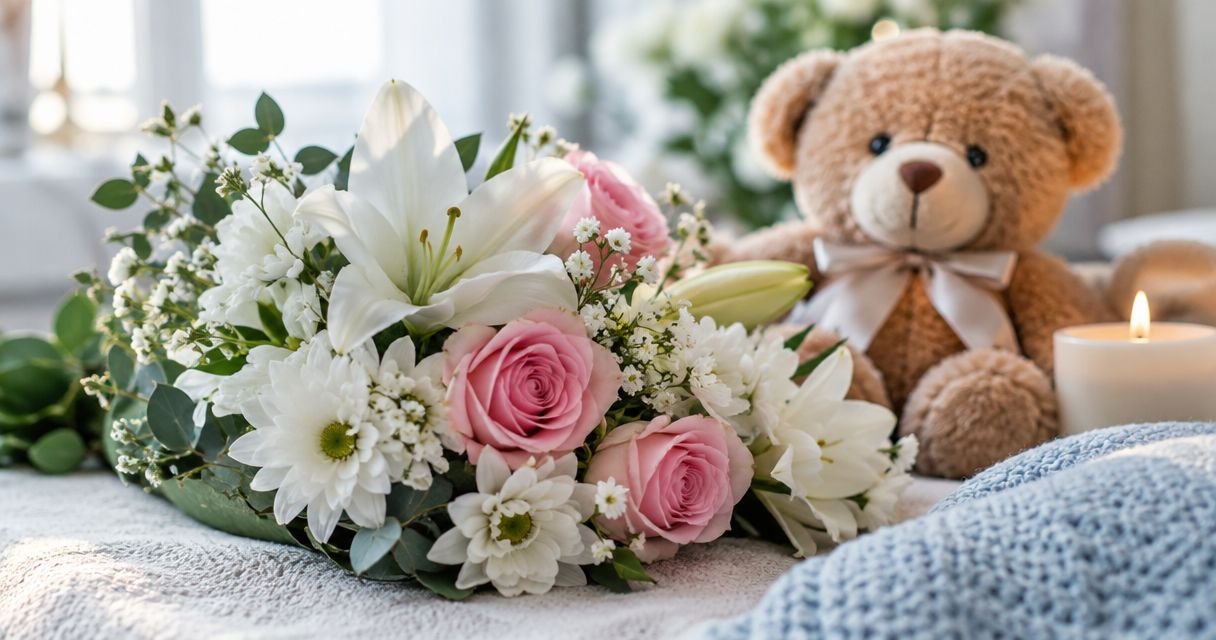
This 2026 ranking prioritises personal meaning, scale, appearance and practical suitability. Roses are the default because they support a simple design; a known favourite takes priority when the family has a clear preference.
FAQ
What are the best flowers for a baby’s funeral?
Roses are a simple default, while daisies suit a gentle garden-style tribute. A personally meaningful flower or colour takes priority over either recommendation.
Do flowers for a baby’s funeral have to be white?
No, flowers for a baby’s funeral do not have to be white. Choose a colour that feels meaningful to the family rather than following an assumed rule.
Are artificial silk flowers appropriate for a child’s funeral?
Artificial silk flowers are an appropriate personal choice where the venue accepts them. Confirm the rules with the funeral director, especially if the flowers will remain at a burial site.
Should I send flowers without asking the parents?
Ask the family or funeral director before sending flowers. Respect requests for donations, private arrangements or no flowers.
Can funeral flowers be kept after the service?
Artificial tributes can be kept after the service, while fresh flowers need a preservation method if you want to retain them. Decide where the tribute will go before choosing its material and size.
What should I write on a baby’s funeral flower card?
Use a short, sincere message, such as the baby’s name followed by an expression of love or remembrance. Avoid explanations for the loss or promises about how the parents will feel.
One last thing
The best choice in 2026 is the tribute the family wants, not the most elaborate arrangement. Before ordering, decide who will take the flowers after the service; that single practical decision helps you choose between a temporary floral tribute and something to keep.
Related guides
- Pink funeral flowers for a grave tribute
- Flowers for a natural or woodland burial
- Artificial flowers for cremation urns