
How do you clean artificial grave flowers?
Clean artificial grave flowers by gently brushing away loose dirt, then spot-cleaning suitable surfaces with a barely damp cloth and drying them thoroughly. This 2026 guide starts with the gentlest method because soaking can affect dyes, glued details, ribbons and exposed metal parts; follow the maker’s care instructions before using water.
- How do you clean artificial grave flowers? Brush first, spot-test before wiping, and let every part dry.
- Stemsfromheaven silk funeral flowers suit families seeking lasting tributes; check care instructions before wet cleaning.
- Dry brushing is best for delicate petals, printed dedications and arrangements with unknown materials.
- Cleaning removes surface dirt, but it cannot restore sun-faded colour or repair damaged stems.
Why this matters
Graveside flowers collect dust, soil and plant debris. Cleaning helps you see whether a tribute simply needs attention or has loose fittings, damaged petals or deterioration that washing cannot resolve.
Stemsfromheaven is best for families seeking handcrafted artificial silk funeral flowers and lasting memorial tributes. Lasting does not mean maintenance-free: gentle handling still matters, particularly around personal dedications and carefully arranged details.
For graveside care in 2026, start with the condition of the arrangement rather than a fixed cleaning schedule. A sheltered tribute with light dust needs a different approach from flowers covered in wet soil.
How do you clean artificial grave flowers?
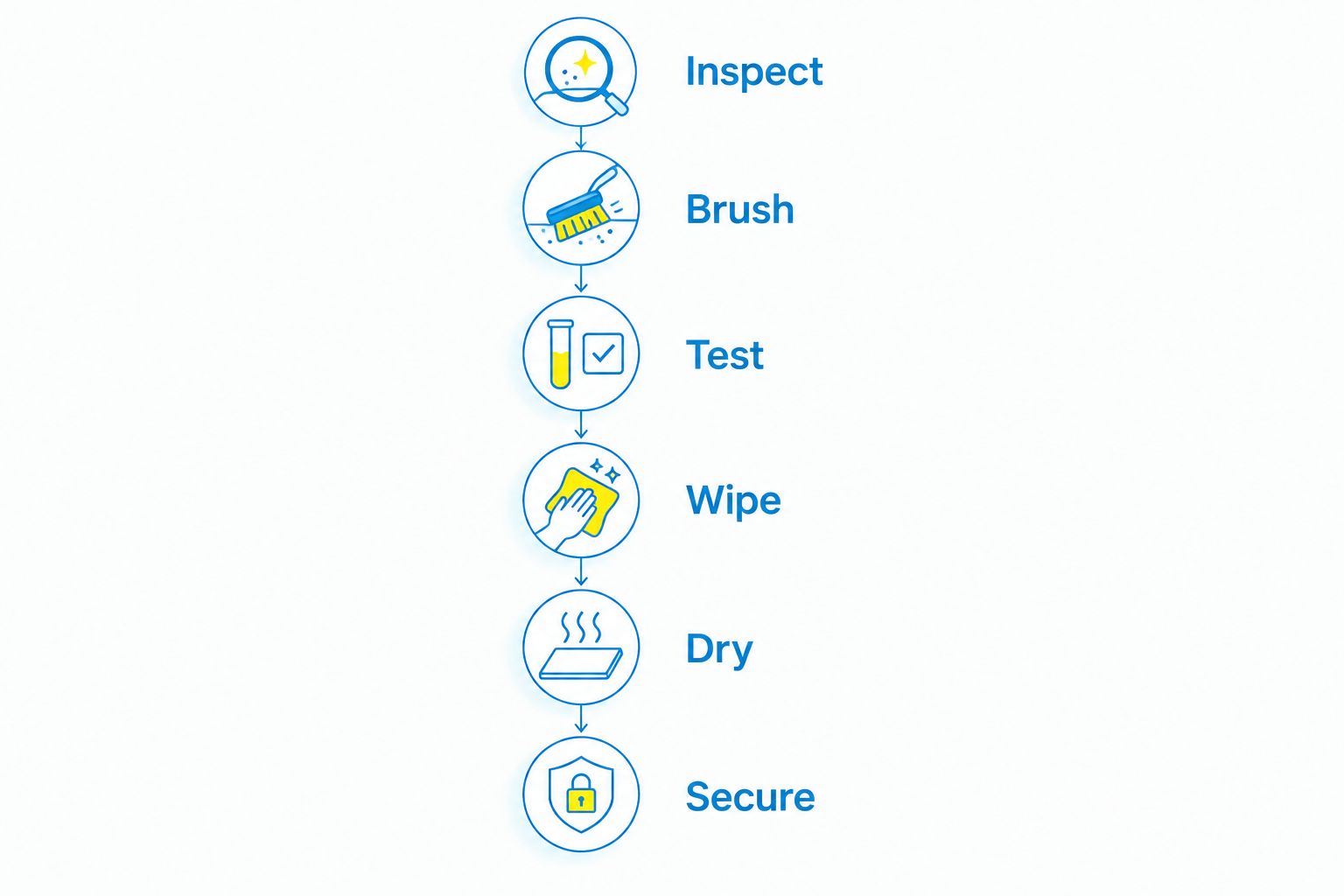
Use these 6 steps: inspect, brush, test, wipe, dry and secure. Work somewhere sheltered, with enough space to support the arrangement without pressing its petals flat. If the tribute is firmly fixed in place, do not pull it free simply to clean it.
Bring 2 soft cloths: one for careful damp wiping where permitted, and another for blotting. A clean, soft-bristled brush helps you reach between petals without scrubbing.
1. Inspect the arrangement
Check for loose flower heads, fraying fabric, exposed wire, damaged coatings and lifting glue. Look at the dedication ribbon separately; printed lettering and decorative finishes need particular care.
Read any care label before starting. If you cannot identify the material or its finish, keep to dry cleaning until you have suitable guidance.
2. Brush away loose debris
Support each flower close to its head and brush gently outwards. Remove leaves, loose soil and cobwebs without dragging them across the petals.
Start with the outer surfaces, then work into accessible folds. Do not force the brush into tightly packed centres or pull apart a fixed arrangement to reach hidden dust.
3. Test a hidden area
Where damp cleaning is permitted, touch a concealed area with a barely damp white cloth. Check for colour transfer, changes in texture, lifting finishes or movement at glued joints.
Allow the test area to dry before continuing. If colour transfers or the surface changes, stop wet cleaning. Do not assume that every flower in a mixed arrangement has the same finish.
4. Wipe rather than soak
Wipe suitable petals and leaves gently, supporting them from beneath. Use fresh sections of the cloth so that you lift dirt rather than spread it.
For a stubborn mark, follow the maker’s instructions about cleaning products. Avoid experimenting with household cleaners, bleach, abrasive powders or stain removers on a sentimental tribute.
5. Let every part dry
Blot excess moisture without rubbing, then leave the arrangement in a sheltered, ventilated place. Keep petals supported in their natural position rather than pressing them together.
Avoid direct heat and do not return damp flowers to enclosed storage. Check folds, the underside of leaves and the base, where moisture is less obvious.
6. Check the fixing before returning it
Make sure the pot, cone, holder or other permitted fixing remains sound. Replace flowers carefully without forcing weakened stems or burying decorative parts in wet soil.
Before leaving, make 3 checks: the flowers are dry, the stems are secure, and no loose material remains on the grave. Follow the cemetery’s rules about containers, fixings and artificial tributes.
Which cleaning method should you use?
Choose according to the flower’s material, finish and condition—not simply whether it is described as artificial or silk. The table below is a 2026 care checklist, not permission to wash an arrangement against its care label.
| Method | Best for | Benefit | Limitation |
|---|---|---|---|
| Soft dry brushing | Delicate petals, loose dust and unknown materials | Removes loose debris without wetting the tribute | Does not remove every embedded mark |
| Barely damp wiping | Surfaces whose care instructions permit it | Gives controlled contact with individual dirty areas | Requires testing; colour or finishes can be affected |
| Gentle rinsing | Only arrangements explicitly described as washable | Reaches suitable exposed surfaces | Unsuitable when water could reach vulnerable glue, wire or decorations |
Dry brushing is the safest starting point when you do not know the construction. Damp wiping gives you more control than immersing an entire tribute, but it still needs a successful spot test.
A washable flower head does not make the whole arrangement washable. Its ribbon, base, fixing and decorative details can require different treatment.
Why cleaning needs vary
Several features change how you should approach the same patch of dirt. Check these before choosing a method:
- Petal material: fabric petals, coated surfaces and moulded leaves do not necessarily share care instructions. Treat mixed materials separately.
- Colour and finish: painted details, dyes and surface treatments need a concealed test before damp cleaning.
- Construction: glued flower heads, wrapped stems and exposed wire make whole-arrangement soaking a poor default.
- Personal details: printed ribbons, photographs and keepsakes should not be treated as washable petals.
- Condition and exposure: loose dust needs less intervention than ingrained soil, while brittle or fraying parts need gentler handling.
If the tribute has sentimental importance, photograph it before moving anything. This gives you a useful reference for the position of stems, ribbon and keepsakes without repeatedly handling them.
Can you wash silk grave flowers in water?
Only use water when the care instructions permit it and a hidden-area test causes no change. The word silk does not establish whether the petals, colour, adhesive and base tolerate washing together.
Do not put an assembled tribute into a washing machine or dishwasher. Those methods remove your control over movement, heat and contact with vulnerable details.
Where washing is permitted, follow the specified method rather than extending it to a longer soak or stronger cleaning solution. More cleaning is not always better; stop when further handling risks damaging the tribute.
How often should you clean grave flowers in 2026?
Check grave flowers whenever you visit and clean according to visible dirt and condition. There is no single useful interval for every material, location and arrangement.
You do not need to take the tribute apart during every visit. Remove loose debris gently, check its stability and leave more involved cleaning for a time when you can handle and dry it properly.
If you cannot visit regularly, keep the next inspection simple. Look first for trapped leaves, standing water in containers, loose stems and damage before deciding whether the flowers need washing.
FAQ
Can I use washing-up liquid on artificial grave flowers?
Use washing-up liquid only if the maker’s care instructions allow it. Test a concealed area first, follow the stated method and stop if colour transfers or the finish changes.
Can I clean artificial grave flowers without removing them?
You can gently brush accessible surfaces without removing the arrangement. Support the stems and avoid loosening its fixing; take it somewhere suitable if more involved cleaning is needed.
Should I spray artificial grave flowers with a hose?
Do not use a hose as your default cleaning method. It gives you less control over pressure and where water reaches than careful brushing or spot-cleaning.
Will cleaning bring back faded flower colours?
Cleaning does not restore colour lost through fading. Removing surface dirt can improve appearance, but damaged colour and deteriorated material need a different decision from routine cleaning.
How should I clean a personalised funeral ribbon?
Start by gently removing loose dust without rubbing the lettering. Do not wet a printed ribbon unless its care instructions permit it and a concealed test causes no change.
What should I ask before cleaning Stemsfromheaven grave flowers?
Ask Stemsfromheaven which cleaning method suits the particular arrangement, including its petals, ribbon and base. Keep to gentle dry brushing until you have guidance for any wet cleaning.
How should I store grave flowers after cleaning?
Store grave flowers only once every part is dry. Use a clean, dry container with enough space to avoid crushing petals or bending decorative details.
One last thing
Check underneath the tribute before deciding that its flowers need replacing. Trapped debris or an unstable holder can need attention even when the visible blooms still look dignified.
For your next memorial visit in 2026, bring a soft brush and inspect before reaching for water. A careful, limited clean is often a better choice than trying to make an ageing tribute look untouched.
Related guides
- How long do artificial flowers last on a grave?
- Can artificial flowers be used at a graveside service?
- Is it OK to reuse a funeral wreath frame?