
Caring for Artificial Urn Flowers: Tips
Artificial urn flowers are a practical choice for memorials, offering long-lasting beauty with minimal care. They can maintain their appearance for years if properly maintained. Here’s how to care for them effectively:
- Materials Matter: Silk and fabric flowers are delicate and should be kept away from water. Latex flowers can warp in heat, while plastic flowers are the most durable and easiest to clean. Seal wire stems with hot glue to prevent rust.
- Cleaning Routine: Dust weekly with a microfibre cloth or soft brush. For stubborn dust, use a cool hairdryer or the salt-shake method. Spot clean stains with mild detergent and water, avoiding excess moisture.
- Protect from Damage: Minimise sunlight exposure to prevent fading. Avoid placing flowers near heat or moisture sources. For outdoor use, choose UV-resistant and weatherproof flowers to keep them looking beautiful year-round.
- Storage Tips: Store flowers in a cool, dry, and dark place. Use acid-free tissue paper or bubble wrap to protect petals, and keep stems upright in sturdy boxes. For long-term displays, learn how to arrange grave flowers that last.
How to Care for Artificial Flowers: Cleaning & Storage Tips
sbb-itb-2970de5
Materials Used in Artificial Flowers
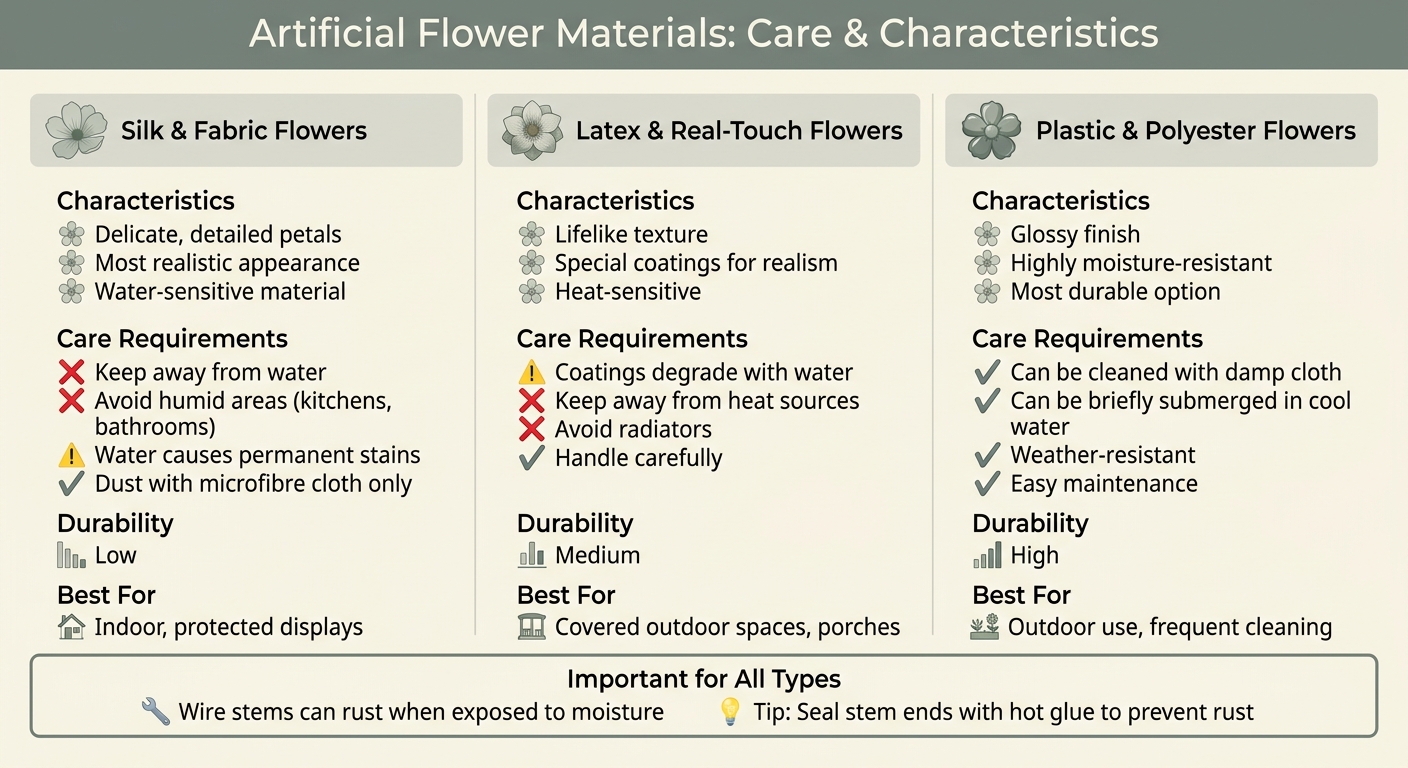
Artificial Flower Materials Care Guide Comparison Chart
Knowing what your artificial flowers are made of is essential for choosing the right cleaning methods and avoiding any damage. Different materials require different care, and most modern artificial flowers fall into three main categories. Each has unique features that influence how they should be maintained.
Silk and fabric flowers are known for their delicate, detailed petals. However, they can be easily marked by water. As Bloomist explains:
Immersing [silk] in water can weaken fibres and leave marks that cannot be reversed [3].
Even minimal moisture can cause permanent stains, so it’s best to keep silk flowers away from water sources or humid areas like kitchens and bathrooms.
Latex and real-touch flowers are prized for their lifelike texture and realism. These flowers often have special coatings to enhance their appearance, but as Silvafleur points out:
Real Touch Artificial Flowers – Their special coatings can degrade with water exposure [4].
They are also sensitive to heat, which can warp the material. While they are sturdier than silk flowers for outdoor use, they still need careful handling and should be kept away from heat sources like radiators.
Plastic and polyester flowers are the most durable option. With their glossy finish, these flowers are highly resistant to moisture and can be cleaned with a damp cloth or even briefly submerged in cool water without damage. If your arrangement is likely to face outdoor conditions or frequent cleaning, plastic flowers are the most practical choice for artificial funeral flowers intended for long-term use.
One thing to keep in mind for all types of artificial flowers is the construction of their stems. High-quality artificial flowers often have flexible wire stems for easy shaping, but these wires can rust if exposed to moisture for too long. To prevent this, seal the ends of the stems with hot glue, especially if they might come into contact with water [4].
Understanding these material differences will help you care for your artificial flowers properly, ensuring they stay beautiful for longer.
Regular Cleaning and Maintenance
Keeping your urn flowers clean isn’t just about aesthetics – it also helps maintain their quality over time. Regular care, tailored to the material, ensures they continue looking their best. As Lucy from Stem & Silk puts it, "The simplest way to clean silk flowers is by dusting them regularly" [1]. A quick weekly dusting routine can save you from dealing with stubborn dirt later and keeps the colours vibrant.
Weekly Dusting Methods
For weekly upkeep, a soft microfibre cloth works wonders. Gently wipe the petals and leaves, starting at the top and moving downwards. This method prevents dust from settling back onto areas you’ve already cleaned. If you’re dealing with intricate designs or tight spaces, a soft-bristled brush or a small paintbrush is ideal for reaching those tricky spots without causing damage.
For areas that are harder to access, the cool air method is a great alternative. Use a hairdryer on its cool setting, holding it about 30 cm away from the flowers. This gently blows away dust without harming delicate petals. If you’re faced with stubborn dust, try the salt trick: place the arrangement in a large plastic bag with about 120 ml of fine salt, seal it, and give it a gentle shake. The salt helps loosen and remove dust effectively.
Spot Cleaning for Stains
If you notice stains or marks, spot cleaning is your best bet. Mix a bit of mild washing-up liquid with lukewarm water, then dampen a microfibre cloth with the solution. Carefully clean the stained area without soaking the flower. As Bloomist advises:
Always dust thoroughly before wet cleaning. Wet dust becomes muddy and harder to remove, potentially causing permanent staining on light-colored materials [5].
Once cleaned, dry the area immediately with a clean cloth to avoid water spots or rust on internal wire stems. For silk or fabric flowers, it’s better to lightly mist the area with a spray bottle instead of applying water directly. Excess moisture can weaken the fibres or leave marks. Allow the flowers to air dry completely before placing them back in their urn or arrangement. By following these steps, your flowers will stay in great condition, ready to brighten up any space.
Protecting Flowers from Environmental Damage
At Stems From Heaven, their custom-made artificial funeral flowers are crafted for long-term graveside placement. However, even the most durable arrangements can suffer if exposed to harsh conditions like prolonged sunlight, moisture, and temperature changes. With the right care, you can help extend their lifespan. Here’s how to protect your arrangements from environmental wear, starting with managing sunlight exposure.
Reducing Sunlight Exposure
UV light is a major culprit when it comes to fading artificial flowers. It breaks down the pigments in the colours and weakens the overall structure [6]. Silk and fabric flowers are especially at risk since they often lack UV-stabilising chemicals.
To minimise damage, avoid placing arrangements in areas with constant, direct sunlight, such as south-facing windows. If you’re selecting flowers for a sunny location, lighter shades like pinks and creams are better options.
Red dye degrades faster than all other colours and is very noticeable. Pinks and creams do fade however, they are far less noticeable than their darker counterparts [6].
For outdoor use, choose flowers labelled as "inherently UV protected." These have UV-protective chemicals integrated during manufacturing, ensuring consistent protection across the entire arrangement. Burnett highlights:
Inherently UV resistant artificial plants are preferable to post-manufacture treatments such as sprays because it ensures that all of the foliage includes a uniform amount of the UV protecting chemical [6].
Managing moisture and temperature is just as important as shielding flowers from sunlight.
Avoiding Moisture and Temperature Extremes
Humidity can wreak havoc on artificial flowers, causing petals to warp, plastic to become brittle, and silk flowers to develop unsightly water spots. To avoid this, keep arrangements away from radiators, heating vents, and open flames. If you need to clean them, use only the cool setting on a hairdryer [2]. For outdoor arrangements, look for products marked "weatherproof" or "moisture-resistant." These are designed to handle rain and high humidity without breaking down [7][8].
Real-touch latex flowers, while realistic, are particularly sensitive to heat. It’s best to place them in covered spaces like porches rather than fully exposed gravesites. When storing flowers for the off-season, make sure they’re completely dry and add silica gel packets to prevent mould or structural damage [7].
Rotating Arrangements Seasonally
Switching out arrangements seasonally can help distribute fading more evenly and limit overall exposure to harsh conditions [2]. For example, you could replace spring geraniums with winter evergreens. This reduces the risk of any single arrangement being overexposed throughout the year. As Celestial at Home suggests:
Storing indoors during extreme weather like heavy storms [helps] to maintain its shape and vibrant colours [9].
When storing artificial flowers, keep them in a cool, dark, and dry place. This helps preserve their colours and prevents heat-related warping [2].
Storing Artificial Urn Flowers
Once your artificial urn flowers are clean and well-maintained, proper storage is key to keeping them looking their best. Whether you’re rotating seasonal arrangements or temporarily putting them away, good storage practices help preserve their shape, colour, and texture, ensuring they’re ready to display again without needing major touch-ups.
Preparing Flowers Before Storage
Before storing your flowers, make sure they’re clean and completely dry. Use a microfibre cloth, a soft brush, or even a can of compressed air [2] to gently remove dust and dirt. If the flowers were outdoors or cleaned with water, let them air dry thoroughly to avoid any moisture-related issues. Once dry, wrap fragile petals in acid-free tissue paper or bubble wrap to prevent tearing or snagging. Be careful not to stack heavy items on top of them, as flattened petals can be difficult to reshape without additional effort. Once prepared, the next step is selecting the right storage containers to keep them intact.
Choosing Storage Containers
Using the right container is essential for maintaining the flowers’ shape and overall appearance. Tall plastic tubs or sturdy boxes are ideal because they allow the stems to stay upright, reducing the risk of crushing. If you’re short on storage space, you can wrap stems loosely in tissue paper instead. For silk or fabric flowers, airtight containers are especially helpful to protect against dust and moisture. When storing tall artificial urn arrangements, choose containers that accommodate the full length of the stems. Labelling your boxes by season or colour can also make it easier to swap arrangements without overhandling.
Best Storage Conditions
Proper storage conditions work hand-in-hand with cleaning to protect your flowers’ form and colour. Keep them in cool, dry, and dark spaces like closets or dry basements. Avoid attics or other areas prone to high temperatures, as excessive heat can warp petals or make them brittle. Keep flowers away from heat sources such as radiators, vents, or south-facing windows to prevent fading from UV exposure. If the flowers were displayed outdoors, make sure they’ve aired out completely before storing them to avoid moisture issues like mould, mildew, or rust on wired stems.
Conclusion
Taking care of your artificial urn flowers is simple. A regular dusting routine and gentle cleaning are all it takes to keep them looking fresh and vibrant. Beyond cleaning, it’s important to protect your arrangement from direct sunlight, moisture, and extreme temperatures to maintain their colour and quality. When not on display, storing them in a cool, dry space ensures they’re ready to use again whenever needed.
"With regular cleaning and maintenance, they can remain vibrant and beautiful for years." – Lucy, Stem & Silk [1]
Opting for high-quality artificial funeral flowers offers a lasting way to honour a loved one. These arrangements are designed to endure the elements, making them a practical choice for graveside tributes, especially when frequent visits aren’t possible.
Stems From Heaven creates custom artificial funeral flowers that combine durability with elegance. Their weather-resistant designs, including casket sprays and personalised tributes, are crafted to stay beautiful whether displayed at a memorial service or outdoors throughout the year. By following these care tips, your arrangement can remain a dignified and enduring tribute for years to come.
FAQs
How do I know what my artificial urn flowers are made from?
To figure out what materials your artificial urn flowers are made of, take a look at the manufacturer’s description or care instructions. These often detail whether the flowers use materials like silk, polyester-PE blends, or other synthetic fabrics. Knowing this can give you a better idea of their durability and how to care for them.
What’s the safest way to clean artificial urn flowers without damaging them?
To safely clean artificial urn flowers, start by using a soft-bristled brush or a clean cloth to gently remove dust, working from top to bottom to stop dust from settling back. For a more thorough clean, lightly spray them with water from a spray bottle and carefully wipe with a soft cloth – be sure not to use too much water. Another option is to use a hairdryer on a cool setting to blow away dust, ensuring the flowers remain undamaged.
How can I make artificial urn flowers last longer outdoors?
To keep artificial urn flowers looking their best outdoors, start by using a UV protection spray to shield them from sun damage. Choose weather-resistant options specifically made for outdoor conditions, such as those offered by Stems From Heaven, as they are built to last. Make it a habit to dust the flowers regularly and keep them away from extreme temperatures to preserve their vibrant appearance.