
Symbolism of Cross Funeral Tributes
The cross is a powerful symbol often used in funeral tributes to represent faith, hope, and remembrance. Its shape reflects spiritual beliefs: the vertical beam symbolises a connection to the divine, while the horizontal beam represents grace and human relationships. Families choose cross tributes to honour their loved ones’ faith and create a meaningful focal point for reflection and prayer during times of grief.
Key points:
- The cross has a rich history in Christian funerary traditions, becoming prominent after the 4th century.
- Different designs, like the Latin cross or Celtic cross, convey specific meanings tied to faith, heritage, and resurrection.
- Floral cross arrangements are popular for their ability to express emotions when words fall short, with white symbolising peace, red for love, and blue for serenity.
- Artificial cross tributes offer a durable alternative, lasting years while preserving the symbolic beauty of the cross.
Cross tributes provide comfort, honour spiritual beliefs, and create lasting memories for families, blending faith with personal touches to celebrate a life well-lived.
The Cross in Funeral Traditions
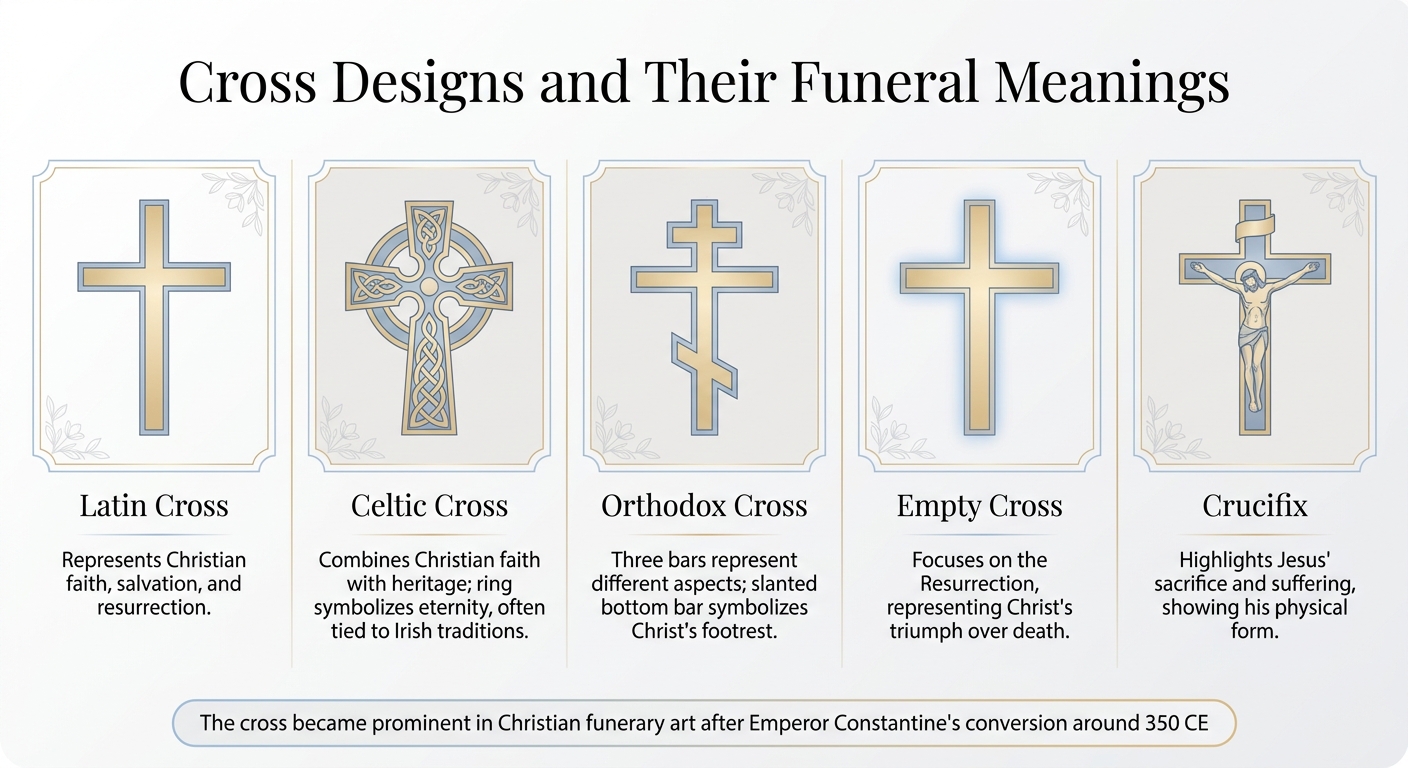
Types of Cross Designs and Their Funeral Meanings
After Emperor Constantine’s conversion around 350 CE, the cross became a prominent symbol in Christian funerary art [3]. Before this, Christians avoided using the cross openly because of its association with brutal executions [3][5].
Today, the cross serves as a marker of faith, salvation, and the hope of resurrection [2]. It acts as a universal symbol, offering a way to express spiritual beliefs when grief makes words hard to find. According to Encyclopaedia Britannica, the cross represents both Christ himself and the essence of Christian faith [3]. Its evolution highlights its enduring importance in spiritual and cultural contexts, as explored below.
Religious Meaning of the Cross
The cross signifies Jesus Christ and the redeeming grace of his Passion and death [3]. Early Christian art often depicted Christ alive and victorious on the cross, with his eyes open, symbolising triumph over death. This artistic focus shifted towards more realistic portrayals of his suffering during the 9th century [3].
Different Christian denominations interpret the cross in ways that reflect their theological focus. The crucifix, which includes the figure of Christ, is commonly used in Roman Catholic and Orthodox traditions. It highlights his sacrifice and dual nature as both human and divine [3]. Protestant churches, on the other hand, often prefer the empty cross, symbolising Christ’s Resurrection and his victory over death [3].
A simple Latin cross often serves as a straightforward expression of Christian belief – faith, salvation, and hope of resurrection [2].
Different Cross Designs and Their Meanings
Various cross designs carry unique meanings, particularly in the context of funerals. The table below outlines some of these designs and their symbolic significance:
| Cross Design | Key Meaning in Funeral Context |
|---|---|
| Latin Cross | Represents Christian faith, salvation, and resurrection, with a longer descending arm [4][2] |
| Celtic Cross | Combines Christian faith with heritage; the ring symbolises eternity, often tied to Irish traditions [4][2] |
| Orthodox Cross | Features three bars; the slanted bottom bar symbolises Christ’s footrest [4] |
| Empty Cross | Focuses on the Resurrection, representing Christ’s triumph over death [3][4] |
| Crucifix | Highlights Jesus’ sacrifice and suffering, showing the corpus or his physical form [3][4] |
The Greek cross, with four equal arms, became widespread by the 4th century, while the Tau cross (shaped like a "T") was an early emblem associated with Christ [3][4]. Crosses are often paired with flowers like lilies or roses, which symbolise rebirth [2]. For those creating outdoor memorials, learning how to arrange grave flowers can ensure these symbols of rebirth endure against the elements. This pairing reflects the Victorian-era trend of softening memorial imagery, moving away from stark reminders of death to more hopeful and gentle motifs [2].
sbb-itb-2970de5
Cross Funeral Flower Arrangements
The cross has long been a powerful symbol of faith, and floral arrangements in this shape add a deeply personal touch to this timeless tribute. Cross-shaped floral displays serve as a poignant centrepiece, offering comfort to those grieving and honouring a life of spiritual devotion. As James Cress Florist beautifully puts it, "Your message of hope for eternal serenity is delivered ever so elegantly in this graceful cross" [7]. When emotions are overwhelming, a thoughtfully arranged floral cross can express what words cannot.
What Floral Cross Designs Represent
Floral crosses carry profound meaning, symbolising faith and spiritual commitment. They do more than honour the deceased; they also provide solace to those left behind. These arrangements blend traditional symbolism with contemporary design, offering a fitting tribute for a variety of memorial settings.
The tone of a service often guides the design of these tributes. For more formal occasions, white floral crosses paired with soft greenery are a popular choice, symbolising purity and reverence. On the other hand, celebrations of life may feature brighter designs, such as red roses or yellow football mums, which reflect joy and a well-lived life. Flowers like carnations and chrysanthemums are commonly used in cross arrangements because of their durability and ability to maintain a lush, comforting appearance throughout extended services. The choice of flowers and colours enhances the overall message of the tribute.
Colour Choices in Cross Arrangements
The colours used in cross arrangements hold deep emotional significance, often resonating with families on a personal level [8].
- White: A classic choice, symbolising purity, peace, and quiet love. It’s a graceful way to express restored innocence.
- Blue: Represents serenity and loyalty, offering a sense of calm while acknowledging sadness.
- Red: Signifies enduring love and respect, with deeper crimson tones reflecting profound grief.
- Purple: Evokes dignity and spiritual reflection, making it particularly suitable for religious tributes.
- Yellow: Conveys warmth and friendship, a cheerful nod to a life filled with connections.
- Pink: Expresses tenderness and gratitude, often chosen to honour nurturing and loving individuals.
Blending colours can also create a meaningful arrangement. For example, blue and white combinations have become increasingly popular, with white symbolising peace and blue adding depth and serenity. Such combinations strike a balance between warmth and composure, offering comfort to grieving families.
For lasting memorials, artificial cross arrangements from Stems From Heaven provide a weather-resistant option. These designs preserve the carefully selected colours and maintain their symbolic beauty over time, ensuring the tribute remains a source of comfort for years to come.
Artificial Cross Tributes for Long-Term Memorials
Why Choose Artificial Cross Arrangements
Cut flowers, while beautiful, often wilt within a week, leaving families with the choice of replacing them regularly or removing them entirely[9]. Artificial cross arrangements, on the other hand, provide a lasting gesture of remembrance. These tributes endure well beyond the memorial service, offering ongoing comfort and serving as a meaningful symbol of faith and memory.
The durability of outdoor memorials hinges on the materials and finishes used[6]. Exposure to the sun and harsh winters can quickly wear down traditional tributes[6]. However, artificial cross tributes from Stems From Heaven are specifically crafted to withstand the varied and often unpredictable UK weather, all while retaining their appearance. As Funeral.com highlights:
Longevity depends on material, finish, and how the artwork is applied[6].
Before purchasing, it’s wise to check with cemetery offices about regulations regarding size, placement, and permitted materials. In areas prone to extreme weather, selecting robust materials and finishes can ensure that tributes remain legible and intact for decades – sometimes up to 30 years[6]. Beyond their resilience, artificial arrangements require minimal maintenance and can be tailored to reflect the unique personality of the departed.
Personalising Artificial Cross Tributes
Artificial cross tributes offer families the opportunity to create a deeply personal memorial. Colour schemes can be chosen to reflect the deceased’s favourite colours, align with religious traditions, or meet family preferences[11]. Adding a memorial ribbon with a heartfelt message, such as "Forever in Our Hearts", provides an additional layer of sentiment[11][12]. Stems From Heaven offers customisable ribbons, with options available for up to £37.50, allowing families to add a meaningful touch.
Personalisation can also extend to the cross’s design. Families might opt for a traditional Latin cross, a Greek cross, or an empty cross, which symbolises the Resurrection rather than the Crucifixion[3]. Thematic tributes can incorporate elements that reflect the deceased’s life or passions. For instance, red, white, and blue floral arrangements can honour a veteran’s service[12]. Aura Funerals notes:
Symbolic tributes are becoming increasingly common and can help deliver some sense of permanence at a time when it is natural if you are struggling to emotionally process change[10].
Ultimately, the goal is to choose a tribute that best represents the personality and values of the deceased, allowing families to create a memorial that feels personal and meaningful, rather than following rigid conventions[6].
Creating a Unified Memorial Theme
Bringing a cohesive theme to a memorial can create a sense of harmony and deeper meaning. Instead of viewing the floral tribute, headstone, and keepsakes as separate pieces, families can connect these elements into a unified spiritual narrative. This approach ensures that every detail works together to honour the deceased’s faith and identity, creating a seamless design that resonates on a personal and symbolic level[14].
Maintaining Consistency in Memorial Design
The cross often acts as a central symbol in memorials, serving as a spiritual anchor. Using the same cross style across elements like headstones, floral arrangements, and memorial jewellery can provide a strong focal point for remembrance. For example, choosing a Celtic cross to reflect Irish heritage ensures that this theme is echoed consistently across all aspects of the memorial, reinforcing its significance[1].
Theological symbolism also plays an important role. An empty Latin cross highlights the Resurrection and triumph over death, while a Crucifix focuses on sacrifice and the Passion. Mixing these two styles within the same memorial can dilute the intended message[1]. Sophie Laurent, Lead Curator & Jewellery Expert at Bennett & Cross, captures the essence of this symbol:
The cross stands as the most recognised and profound symbol in human history. It is a geometric intersection that transcends simple lines to represent the convergence of divinity and humanity.[1]
Material and colour choices further enhance this unity. Gold accents across floral arrangements, headstone lettering, and keepsake jewellery can symbolise divinity and glory, while silver elements convey themes of redemption[1]. Colour coordination adds another layer of harmony – white flowers paired with white ribbons evoke peace and purity, while red tones can symbolise love or sacrifice[13].
Personalised artificial cross tributes also play a key role in creating a cohesive design. When these tributes align with headstone designs and complement memorial keepsakes, they strengthen the memorial’s overall message. Companies like Stems From Heaven help families achieve this by offering customisable artificial cross tributes. By ensuring the cross remains proportional and clearly visible, families can create memorials that feel intentional and reverent. These unified designs can transform decorative elements into what some consider "sacramentals" – sacred signs that inspire reflection and prayer[1].
Conclusion
Cross funeral tributes carry deep spiritual meaning, acting as more than just decorative pieces at memorial services. Sophie Laurent describes the cross as a "cosmic intersection", with the vertical beam symbolising the connection between the divine and humanity, and the horizontal beam representing relationships among people and the extension of grace[1]. This simple yet profound shape transforms grief into a visual story of faith, sacrifice, and eternal hope. Beyond symbolism, cross tributes also serve a practical purpose, offering a focal point for reflection and prayer, enhancing the spiritual experience of memorial services.
Choosing or creating a cross tribute can bring emotional comfort during times of loss. As Funeral.com explains, "Selecting imagery is not about decoration. It’s about memory. It’s about telling the story of someone you love in a way that will still make sense years from now"[2]. Whether opting for fresh floral arrangements or more enduring tributes from providers like Stems From Heaven, these symbols become tangible reminders for mourners, offering both immediate comfort and the promise of lasting remembrance.
The enduring appeal of cross tributes lies in their ability to preserve memories with grace and dignity. Families often choose cemetery markers or memorial plaques as physical spaces to "locate" and honour love[2]. When designed thoughtfully – using meaningful symbolism, quality materials, and personal touches as discussed earlier – cross tributes create lasting spaces for reflection and remembrance that resonate across generations.
Ultimately, cross tributes stand as timeless expressions of faith and devotion. They offer grieving families a meaningful way to honour their loved ones, while also creating sacred spaces for reflection that endure over time. These tributes weave together faith, memory, and design into a powerful and lasting narrative.
FAQs
Which cross design best fits the service?
A casket cross is a thoughtful choice for a funeral service. Representing Christian faith, it provides a central point for reflection and remembrance throughout the ceremony.
Is an empty cross or crucifix more appropriate?
An empty cross or crucifix is often seen as especially suitable for funeral tributes. In Christian traditions, these symbols stand for faith, hope in resurrection, and the promise of eternal life. Their deep spiritual meaning offers a sense of comfort and purpose during memorial services.
Will an artificial cross tribute last outdoors in the UK?
Artificial cross tributes are crafted to withstand the UK’s weather conditions, ensuring they remain intact and visually appealing over time. Designed for long-term outdoor use, they are a fitting choice for gravesides and memorials, offering durability while preserving their appearance.
Related Blog Posts
- Funeral Wreath Checklist: Planning a Funeral Service
- Funeral Flowers & Etiquette: Your Complete Guide to Lasting Tributes:
- Symbolism of Flowers in Pet Memorial Tributes
- Funeral Floral Arrangements Delivered Across the UK: What You Need to Know