
5 Advances in Artificial Flower Design
Artificial flowers have evolved dramatically, now replicating the look and feel of natural blooms while offering durability and low maintenance. These advancements are particularly valued for memorials and graveside tributes, where long-lasting beauty is essential. Here are five key innovations driving this transformation:
- Gradient Colouring: Hand-dyeing and pigment-based techniques create lifelike colour transitions, ensuring vibrant, fade-resistant petals.
- Weather-resistant Coatings: UV-inhibiting sprays and protective finishes shield flowers from sun, rain, and harsh weather.
- Eco-friendly Materials: Recycled fabrics and plastics, along with compostable options, reduce environmental impact.
- 3D Printing: Custom designs with precise botanical details allow for highly personalised tributes.
- Improved Wiring: Flexible and reinforced stems enhance realism and durability, even in outdoor conditions.
These advances combine to produce artificial flowers that are visually stunning, durable, and environmentally conscious, making them an ideal choice for memorial and funeral settings.
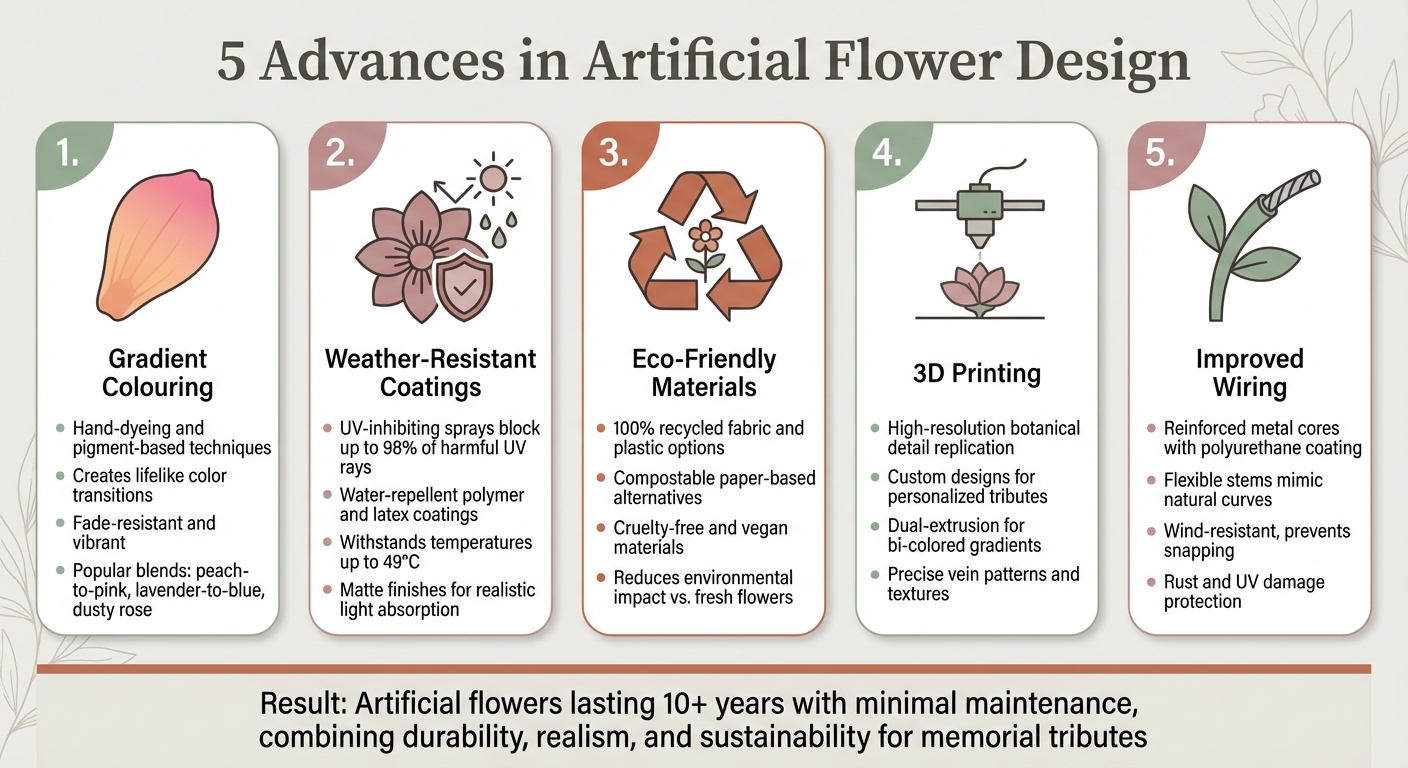
5 Key Advances in Artificial Flower Design for Memorials
Current Trends in Artificial Flower Design
The artificial flower industry is undergoing a transformation, with design and production now revolving around three main trends: hyper-realism, sustainability, and precision manufacturing.
The quest for lifelike designs has advanced far beyond simple colour matching. Today’s manufacturers use high-definition scanning and 3D modelling to capture even the tiniest details, like the vein patterns on petals and leaves [2][8]. By incorporating these subtle imperfections, artificial flowers now mimic the natural beauty of real blooms with remarkable accuracy.
Environmental considerations are also reshaping the industry. Many manufacturers are adopting recyclable polymers and eco-conscious materials, offering artificial funeral flowers as a long-lasting, eco-friendly alternative to fresh blooms. Unlike fresh flowers, these products require no water, soil, or pesticides throughout their lifespan [8]. The shift from natural silk to synthetic polyester blends has also made artificial flowers entirely cruelty-free and vegan [3]. This appeals to buyers who see frequent fresh flower purchases as wasteful, both in terms of environmental impact and cost.
Advances in manufacturing techniques have further elevated the quality of artificial flowers. With tools like automated four-colour roller printing and die-cutting combined with injection moulding, manufacturers can produce intricate petal shapes with precision [2][7]. These methods ensure that artificial flowers retain their appearance for over a decade when used indoors [3], far outlasting fresh flowers, which typically wilt within days.
Design aesthetics have also embraced the principles of “wabi-sabi“, which celebrate natural imperfections. This has led to styles featuring organic hand-tied arrangements, asymmetrical cascades, and varied stem heights that reflect the irregularity of wildflowers [4][8][6]. Paired with earthy, muted tones like sage green, dusty rose, and terracotta [4][6], these designs evoke a botanical authenticity that feels less manufactured.
These trends are laying the groundwork for more refined innovations in artificial flower craftsmanship.
sbb-itb-2970de5
1. Lifelike Petals with Gradient Colouring
Realism and Aesthetic Appeal
Gradient colouring has brought artificial flowers closer to mimicking the beauty of real blooms by replicating the natural transitions of colour seen in live petals [2]. This effect is often achieved through meticulous techniques like multi-layer dyeing and hand-painting, which allow for striking ombre and watercolour effects [2].
Alick Burnett, Managing Director at Blooming Artificial, highlights the value of these manual methods:
“To achieve a lifelike appearance, artificial flowers are usually dyed by hand… this allows for better control and the ability to achieve specific colours, patterns, and effects challenging for machines.” [2]
For the 2025–2026 period, popular colour blends include peach-to-pink, lavender-to-blue, and dusty rose. Many brands are leaning towards muted, calming tones such as soft beige, sage, terracotta, and sand [6][10]. A major development has been the transition from liquid dyes to pigments, which produce vibrant colours that remain on the surface instead of soaking into the material [2]. In polyurethane “real touch” flowers, colours are injected into the foam and then sprayed and heat-cured, resulting in shades that are both vivid and permanent [9]. To ensure these flowers look natural in various settings, manufacturers even test them under studio lighting to verify that the petals photograph well and cast realistic shadows [6].
These advancements not only enhance the visual appeal of artificial flowers but also ensure their colours remain durable, even in challenging outdoor environments.
Durability for Outdoor Use
The improvements in gradient colouring go beyond aesthetics – they also enhance durability. UV stabilisers and pigment-based hand-dyeing techniques help artificial petals resist fading and weathering. For memorial settings or graveside tributes, choosing flowers specifically labelled as “UV-treated” ensures that their gradient colours won’t bleach under direct sunlight. Additionally, blooms made from polyester or latex are better equipped to withstand wind, rain, and prolonged exposure to the elements [7].
Customisation Capabilities
Customisation has become a key feature in the evolution of artificial flowers, allowing them to meet the unique needs of memorial tributes. By 2026, buyers increasingly expect bespoke options, including tailored colour palettes and size adjustments [6]. Many luxury brands now provide gradient colours that align with specific themes or family preferences for funerals and memorials [5][6]. This level of personalisation not only enhances the emotional significance of tributes but also ensures they are durable enough for long-term outdoor use. Together, these innovations strengthen the role of artificial flowers as lifelike and lasting memorial tributes.
2. Weather-resistant Coatings
Much like the intricate beauty of real petals, modern coatings are transforming artificial flowers by improving both their longevity and natural appearance.
Durability for Outdoor Use
Weather-resistant coatings have made artificial flowers a reliable choice for outdoor displays. Advanced UV-inhibiting sprays now block up to 98% of harmful UV rays, effectively preventing the sun-bleaching that used to affect untreated fabrics[12]. This is particularly important for memorial arrangements, where it is essential to arrange grave flowers that last and maintain their appearance over time.
These coatings go beyond UV protection. Products like “Real Touch” polymer and latex coatings repel water and protect against humidity, while stem-sealing techniques prevent water from seeping inside, reducing the risk of mould or rust[12].
Materials such as high-density polyethylene (HDPE) and polyester benefit significantly from these treatments, retaining their shape and flexibility even in harsh conditions like high winds or salty air[12]. Solution-dyed fabrics treated with these coatings can also withstand temperatures as high as 49°C without warping or fading[12]. This level of durability ensures that artificial flowers can brave the British weather, from summer heatwaves to frosty winters, without losing their charm.
But durability isn’t the only focus – these coatings also enhance the look and feel of artificial flowers.
Realism and Aesthetic Appeal
Today’s coatings are designed to elevate realism. Matte finishes are now preferred for their ability to mimic the way real petals absorb light, replacing the overly shiny surfaces that once characterised artificial flowers[2][6]. Alick Burnett, Managing Director at Blooming Artificial, highlights the role of texture in creating lifelike designs:
“To capture that signature waxy texture, flowers like tulips and lilies are usually crafted from foam or latex for a realistic finish. Whereas more delicate blooms like hydrangeas and geraniums tend to be made from polyester silk, which gives them a soft, fluttery petal look with all the intricate details.”[2]
“Real Touch” technology takes this a step further, offering a cool, soft, and slightly moist feel that closely resembles fresh flowers[3]. This tactile authenticity is especially valued when choosing artificial funeral flowers over real flowers, where a natural and respectful appearance is essential. For outdoor displays, experts recommend applying a clear, matte UV-resistant spray every 3–6 months to maintain both the protective layer and the lifelike aesthetic[12].
These innovations ensure that artificial flowers are not only weatherproof but also visually and texturally convincing. At Stems From Heaven, every custom-made funeral arrangement is treated with advanced weather-resistant coatings, guaranteeing that each tribute endures outdoor conditions while preserving its elegant, lifelike appearance.
3. Eco-friendly Materials in Silk Flower Production
As awareness of environmental issues grows, the artificial flower industry is moving away from traditional petrochemical-based materials and exploring more sustainable options.
Sustainability and Eco-friendliness
Historically, artificial flowers – often called ‘silk’ flowers – have been made using materials like polyester, nylon, or polyurethane foam. These materials are derived from petrochemicals and contribute to plastic waste, of which only 9% is recycled, with much of it ending up polluting oceans [13].
In response, modern manufacturers are introducing alternatives crafted from 100% recycled fabric and 100% recycled plastic, giving new life to materials that might otherwise end up in landfills. These eco-friendly collections include popular designs featuring roses, poppies, and eucalyptus. Harriet Smithson, a Sustainable Florist and Environmentalist at Cumberland Flower Farm, highlighted this shift:
“Research into the market projections suggest that more sustainable, paper based flowers are considered a growth area for artificial manufacturers, which is good news!” [13]
For those seeking fully compostable options, paper-based flowers are an excellent choice. However, they are less durable in outdoor settings compared to recycled synthetic materials. That said, the extended lifespan of artificial arrangements can offset the environmental impact of frequently replacing fresh flowers.
This eco-conscious shift aligns naturally with the need for long-lasting, weather-resistant features, particularly for memorial tributes.
Durability for Outdoor Use
Combining sustainable practices with durability, these recycled materials ensure memorial tributes remain both respectful and resilient, no matter the season.
Recycled polyester (PET) is a prime example. Not only does it meet high standards for weather resistance, but it also contributes to reducing environmental harm. When treated with UV stabilisers, these materials can withstand direct sunlight and rain without fading or degrading, making them ideal for graveside tributes and outdoor arrangements that need to endure the unpredictable British weather [13].
At Stems From Heaven, custom-made funeral arrangements incorporate these eco-friendly materials wherever possible, ensuring that tributes remain environmentally conscious while standing the test of time.
4. 3D Printing for Custom Floral Designs
3D printing has transformed the way custom memorial tributes are created, offering an unmatched ability to replicate botanical details with incredible precision. Thanks to advancements in weather-resistant coatings and eco-friendly materials, this technology delivers the durability and personalisation essential for long-lasting tributes.
Customisation Capabilities
The process starts with meticulous 3D modelling, capturing every detail of the chosen flower. Alick Burnett, Managing Director at Blooming Artificial, describes the process:
“Making artificial flowers begins with solid research and planning… we carefully inspect the real flower… to study the shape of the stem, the intricate patterns and colour of the petals, details and veins on the leaves ensuring complete replication. Next, we undertake 3D modelling with reference to the natural flower.” [2]
This digital phase allows manufacturers to refine each element, ensuring every piece meets exact specifications. For memorial tributes, where specific floral varieties or personalised designs are often requested, this level of precision ensures meaningful blooms are replicated with care. It’s this attention to detail that makes 3D printing ideal for achieving hyper-realistic textures in floral designs.
Realism and Aesthetic Appeal
Modern 3D printing technology delivers exceptional realism through high-resolution printing and advanced texturing. For example, delicate rose petals can be crafted to mimic the fragility of natural flowers, while precise filament placement recreates organic textures that feel lifelike [14]. Techniques like dual-extrusion printing add bi-coloured gradients, and even subtle details like soft thorns and intricate leaf veins are achievable [15].
Many designs now blend 3D-printed elements with traditional materials for enhanced functionality. Take artificial rose stems, for instance – priced at around £11.50 for a pack of 10, these feature 3D-printed leaves attached to flexible iron wire, combining realistic textures with the flexibility needed for custom arrangements [15]. At Stems From Heaven, such hybrid methods ensure tributes not only look botanically accurate but also withstand outdoor conditions, making them ideal for graveside placements.
5. Improved Wiring Techniques for Flexible Stems
Modern artificial funeral tributes are benefiting from a wave of improvements, and wiring techniques are no exception. These advancements have elevated both the look and durability of artificial flowers, particularly for outdoor memorials. By moving away from basic plastic-coated wires to reinforced metal cores encased in materials like polyurethane or polyethylene, manufacturers have achieved a significant leap in both aesthetics and functionality. As Alick Burnett, Managing Director at Blooming Artificial, puts it:
“Stems are essential; they hold the design together and define its realism.” [2]
Here’s a closer look at how these wiring innovations enhance realism, durability, and customisation.
Realism and Aesthetic Appeal
Flexible wiring has revolutionised the way artificial flower stems are shaped, allowing them to mimic the natural curves of real plants. This subtle shaping – like the gentle upward bend of a sunflower or the cascading flow of a bouquet – avoids the rigid, unnatural look of older designs [16]. Designers can now position blooms in various directions, creating what one expert calls the “perfectly imperfect” charm of real botanicals [16].
Even the leaves benefit from this flexibility, as they can be curved outward or downward to add depth and prevent arrangements from appearing flat [16]. Injection-moulding techniques further enhance realism by adding intricate details like rose thorns or the soft texture of sunflower petals [2]. These small touches bring an authentic feel to memorial tributes, making them nearly indistinguishable from fresh flowers.
Durability for Outdoor Use
Beyond appearance, these wiring advancements ensure artificial flowers can withstand outdoor conditions. Flexible wire cores allow stems to bend slightly under wind pressure, reducing the risk of snapping – a critical feature for long-term outdoor durability [17][5]. High-quality adhesives and structural reinforcements help flowers retain their shape even in challenging weather [7].
For outdoor-specific designs, polyethylene coatings protect the internal wire from rust and UV damage, ensuring the stems remain strong and flexible over time [2]. This combination of durability and flexibility ensures even heavier flowers, like hydrangeas or peonies, stay securely in place without drooping or falling apart [7][5].
Customisation Capabilities
Modern wiring techniques also make it easier to create personalised arrangements. Florists can adjust stem heights and angles to form asymmetrical designs that reflect the organic beauty of nature [16]. Specialised wires – such as blue annealed, green lacquered, or aluminium – provide the flexibility needed to craft bespoke funeral tributes [18].
At Stems From Heaven, these wiring innovations allow for custom designs that align with personal preferences while still being resilient enough for long-term display at gravesites. You can browse our full range of durable designs in our online shop. This balance of adaptability and durability ensures that each tribute remains both meaningful and practical, no matter the conditions.
How These Advances Are Used in Funeral and Memorial Flowers
These advancements bring more than just visual appeal – they ensure that funeral and memorial flowers remain respectful, enduring tributes, even in the face of the UK’s famously unpredictable weather.
In the UK, innovations such as gradient colouring, weather-resistant coatings, eco-conscious materials, 3D printing, and improved wiring have revolutionised the way funeral and memorial flowers are crafted. These updates tackle the challenges of creating graveside tributes that need to stay elegant and intact over time, regardless of the elements.
Weather resistance plays a crucial role in preserving memorial flowers. By combining UV protection with waterproofing, these flowers maintain their appearance through changing seasons, offering families reassurance that their tributes will hold up. Gradient colouring adds a lifelike touch, creating subtle variations in hue that steer clear of an artificial, “plastic” look. Additionally, polyester silk is often used to mimic the soft, natural movement of petals, especially in delicate blooms like hydrangeas.
Modern silk flowers now frequently incorporate environmentally friendly, cruelty-free, and vegan materials, aligning with the growing demand for sustainable practices [3]. Enhanced wiring techniques allow for intricate designs – like cascading arrangements or structured wreaths – that remain intact even during harsh weather. Meanwhile, 3D printing technology has opened the door to highly personalised tributes, enabling families to create arrangements that are unique to their loved ones.
One standout example is Stems From Heaven, a UK-based provider of bespoke artificial funeral flowers. Their tributes are designed to last, featuring weather-resistant wreaths, casket sprays, and personalised designs such as “mum” and “dad” wreaths. These arrangements combine durability with handcrafted details, such as hand-painted accents, ensuring they remain elegant over time. Families can tailor these tributes with specific flowers, colours, and sizes to reflect individual memories. Maintenance is simple too – just a quick dusting or a gentle blow-dry keeps them looking pristine [1][3].
Altogether, these innovations form the foundation for creating funeral and memorial flowers that are both enduring and respectful, honouring loved ones with dignity and care.
Conclusion
The world of artificial flower design has seen remarkable progress thanks to advancements in materials, manufacturing techniques, and eco-conscious practices. From sophisticated gradient colouring to improved wiring methods, these developments have elevated the craft to new levels.
When it comes to graveside tributes and memorial flowers, these innovations bring practical benefits. Modern artificial flowers can now last over a decade with minimal upkeep, offering a cost-effective and enduring way to honour loved ones. As Isaac James highlights:
“Artificial flowers provide several benefits, including longevity, low maintenance, and resistance to weather conditions. They offer a sustainable alternative without the need for water or pesticides, making them environmentally friendly” [11].
Today’s silk flowers combine durability with sustainability, offering cruelty-free options that stand up to outdoor conditions. These eco-friendly features work hand-in-hand with technical advancements to create memorial tributes that last.
Realism has also reached impressive new heights. AI-assisted colour matching, 3D moulding based on real flowers, and specialised latex coatings now replicate the look and feel of fresh blooms with astonishing accuracy.
These innovations together make artificial flowers a dependable, visually appealing, and sustainable choice for memorial tributes. At Stems From Heaven, we embrace these advancements to create bespoke artificial funeral flowers that remain beautiful and require minimal care, helping families across the UK honour their loved ones with grace and dignity.
FAQs
How long do outdoor artificial memorial flowers last in UK weather?
Outdoor artificial memorial flowers are made to handle the unpredictable UK weather and can last for several years. Their durability largely depends on the quality of the materials and how much they are exposed to the elements. Typically, they are designed to be sturdy, weather-resistant, and require minimal upkeep, helping them maintain their appearance for a long time.
What should I look for to ensure artificial flowers won’t fade in sunlight?
To keep artificial flowers from fading, opt for those made with UV-protective coatings and weatherproof materials. Fabrics like solution-dyed polyester work particularly well because the pigments are locked in at a molecular level. This ensures the colours stay bright and resist fading, even after extended exposure to sunlight.
Can I get a fully personalised memorial tribute (colours, wording and flower types)?
Yes, you can order a fully personalised memorial tribute tailored to your preferences. This includes custom colours, specific wording, and your choice of flower types. Bespoke funeral arrangements and tributes are crafted to reflect your unique requirements and wishes.