Permanent Grave Flowers in Bromley, Kent, Surrey and South London — A Complete Buying Guide
Keeping a loved one’s grave looking beautiful is something most families feel strongly about. The challenge is that fresh flowers, however lovingly chosen, rarely last more than a week outdoors — and for many of us, regular visits to the cemetery just aren’t possible.
Permanent artificial grave flowers solve this quietly and well. A good arrangement stays vibrant through the seasons, requires no upkeep between visits, and means the grave always looks tended — whether you were there yesterday or three weeks ago.
If you’re new to buying artificial grave flowers and not sure where to start, this guide will walk you through everything: what to look for, what the local cemeteries allow, how to choose something that feels right, and how long a decent arrangement will actually last.
Advantages of High-Quality Artificial Flowers
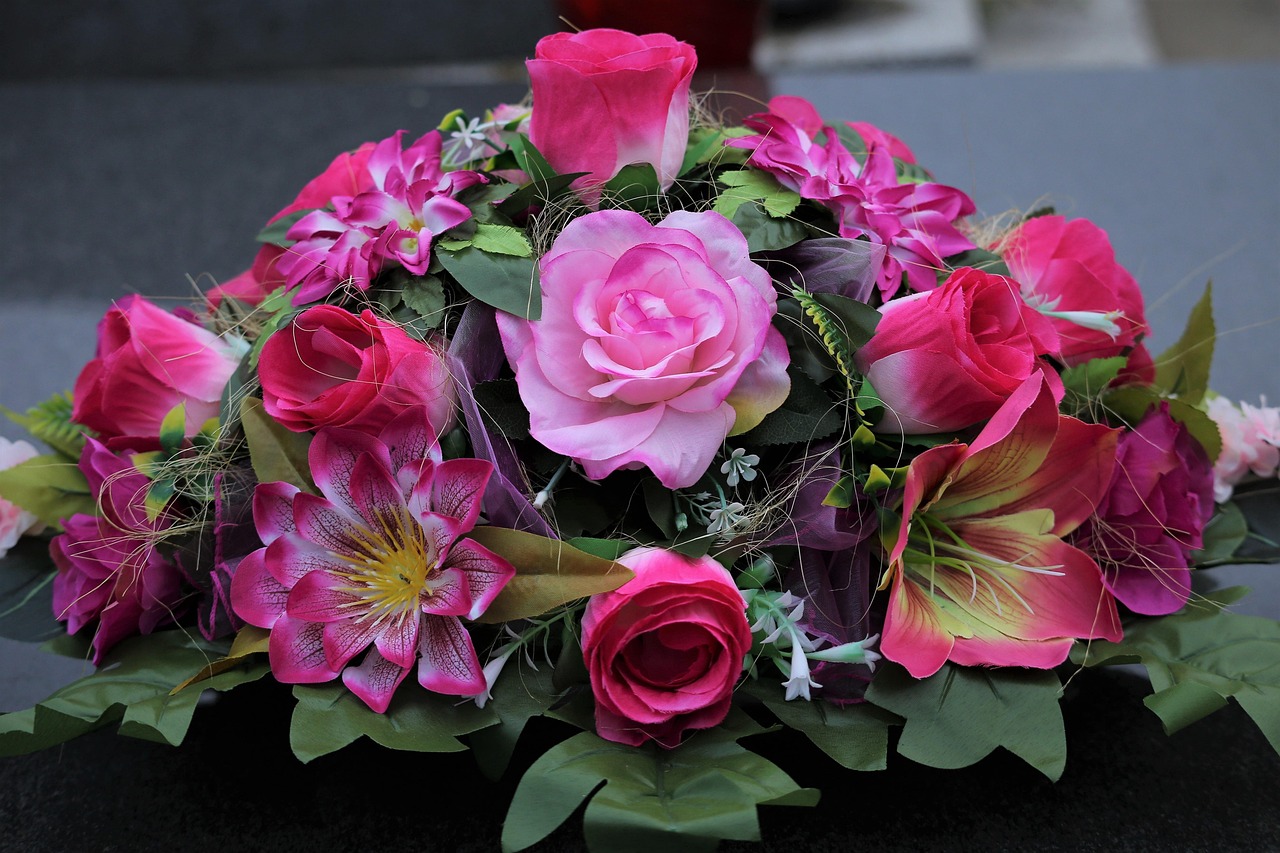
Luxury artificial funeral flowers, especially those handcrafted with attention to detail, offer a lasting solution. The quality materials used today replicate the softness, colour, and form of real blooms, allowing for a life-like tribute that does not wilt or fade rapidly. These permanent grave flowers stand resilient through the varied weather typical of South East England.
Artificial flowers reduce maintenance demands. There’s no need for regular watering or weekend trips to replace drooping bunches. Instead, families and funeral directors can display these arrangements with confidence that their elegant appearance endures through seasons and years.
By choosing premium artificial grave flowers, families send a message of enduring respect and remembrance. The flowers maintain their freshness, enabling visitors to focus on memories rather than upkeep.
Why Permanent Flowers Work So Well for Graves in This Part of England
Families across Greater London, Kent and Surrey tend to be spread across a wide area. The cemetery might be in Bromley or Orpington, but siblings may be coming from different parts of Kent; grandchildren may have moved further afield. Life being what it is, visits happen when they can — once a month, perhaps, or on birthdays and anniversaries.
Fresh flowers on a grave in the UK are also fighting a losing battle with the weather. Cold and damp will reduce a fresh arrangement to compost within days in winter. Even in summer, five or six days is a reasonable expectation before they begin to deteriorate. Cemetery staff, maintaining the grounds as they should, will remove dead and fading material on a rolling basis — so the flowers you placed with care may simply be gone by the next visit.
A well-made permanent arrangement — properly UV-treated, designed for outdoor exposure — holds its colour and shape through a full British year. It’s there when you arrive, looking as you intended it to look. That reliability is the real appeal.
What Local Cemeteries Allow
Regulations vary between sites, so it’s always worth a quick call to the cemetery office before placing a permanent arrangement for the first time. The question to ask is simply: “Are artificial flowers permitted on this type of grave, and is there a container or size restriction?” Most staff answer this in under a minute.
The general picture across Bromley London Borough, Sutton, and the north Kent and Surrey area:
Local authority lawn section cemeteries — the most common type across this area — typically permit artificial flowers placed inside the built-in grave vase or within an approved container in the headstone border. This is usually an 18-inch strip of earth directly in front of the memorial. Anything placed outside this area, on the grass or beyond the grave boundary, may be removed without notice — not as a punitive measure, but to allow groundskeeping machinery to operate safely.
Traditional grave sections, which tend to feature older graves with kerb surrounds or enclosed plots, usually offer more flexibility. If the grave has a kerb set around it, you have more space to work with and more options in terms of arrangement size and style.
Churchyards and privately-managed sites vary the most. Many are perfectly happy with artificial flowers in a vase; a small number — particularly older, conservation-listed Church of England churchyards — prefer natural materials only. It’s always worth checking.
Well-known sites in this area include Beckenham Cemetery and Crematorium, Orpington Cemetery, Sutton Cemetery, Bandon Hill Cemetery in Wallington, and crematorium memorial gardens across north Kent. All of them field enquiries like this regularly.
One detail worth knowing: most cemetery regulations allow staff to remove artificial flowers that have become “unsightly or deteriorated.” A quality arrangement, kept reasonably fresh with an annual replacement, won’t fall into this category. A sun-bleached arrangement that’s been in place for three years might. Quality and occasional replacement aren’t just about appearance — they’re how you stay on the right side of the rules.
What Makes a Good Permanent Grave Flower Arrangement
Not all artificial flowers are made equally, and the difference between a well-made memorial arrangement and a cheap import is obvious within a single season outdoors. Here’s what to pay attention to.
UV treatment. The most important factor by some margin. Sun fades artificial flowers faster than rain, frost or wind — an arrangement without genuine UV stabilisation will lose its colour within three or four months of summer exposure, turning from deep red or vivid pink to something pale and washed-out. Look for arrangements described specifically as UV-stabilised or UV-resistant, and if you’re speaking to a supplier, ask how long the colour should hold in direct sunlight. A good answer is twelve to eighteen months; a vague one is a warning sign.
Stem and wire quality. Many cheaper arrangements use bare wire stems that corrode quickly in damp British conditions. Rust bleeds upward through the fabric of the petals, staining them from the inside in a way that can’t be cleaned. Coated wire stems, or fabric-wrapped stems, hold up far better.
Weight and stability. Lightweight pots tip over in wind — a persistent frustration on exposed grave plots. If you’re placing flowers in a standalone container, heavier stoneware or concrete-finish bases sit far more securely. If you’re using the grave’s built-in vase, the arrangement should fit snugly and sit low in the vase rather than sitting tall and loose, which catches the wind.
Scale. This is the thing that catches first-time buyers most often. Grave vases are genuinely small — comparable in size to a large jam jar. Product photographs, shot close-up against a plain background, make arrangements look generous. On a grave, in front of a full headstone, the actual size reasserts itself quickly. An arrangement that looks modest in a photo is usually the right choice; something that looks large will often be too big for the vase or the space.
Construction. Hand-tied or hand-wired arrangements hold together significantly better than those assembled with a hot glue gun. The glue bond breaks down in the cycle of summer heat and winter cold, and arrangements begin shedding petals and individual stems after a single year. A product listing that describes the making process in some detail — materials, construction method, how it’s finished — usually indicates a genuinely handmade product. A listing with one photograph and no description often indicates a bulk import.
Choosing Something That Feels Right for the Person
The practical questions matter, but so does this one.
Funeral flowers are chosen quickly, under pressure, from whatever the florist or funeral director has available. Permanent grave flowers are chosen differently — quietly, at home, with time to think. They’re not for the service. They’re for the grave, which is the place you’ll return to privately, over years.
It’s worth thinking about what flowers — or colours, or styles — would have meant something to them.
Many families know this without thinking: the roses she grew in the back garden, the sunflowers her grandchildren always picked for her, the particular shade of blue that was simply his favourite colour. These aren’t grand gestures. On a grave, placed by someone who knew them, they become a small private statement: we remembered the specific person, not just the fact of losing them.
If you don’t know their favourite flower, colour and character are still useful guides. Someone vivid and warm probably doesn’t want a subdued arrangement. Someone who took pride in an immaculate garden might appreciate something more structured and formal. The headstone inscription is fixed. The flowers are yours to choose, and change. That’s a gift worth using thoughtfully.
Changing With the Seasons
Some families choose one good arrangement and replace it when it fades. That’s perfectly sensible — simple, low-maintenance, and it means the grave always has something beautiful on it.
Others prefer to change with the seasons, and there’s something genuinely appealing about this approach. A pale spring arrangement of whites, creams and soft yellows placed around Easter. Something warmer and more vivid for summer — coral, gold, deep pink. Rich russets, berries and chrysanthemums as autumn comes in. Deep greens and reds, or clean all-white, for winter.
It makes each visit a little more purposeful. You’re not just arriving; you’re bringing something new. And it keeps the grave looking freshly considered rather than simply maintained.
Neither approach is more right than the other. It comes down to how often you visit and what feels meaningful to you.
How Long to Expect a Good Arrangement to Last
A genuinely useful guide, since most suppliers stay vague on this:
A well-made, UV-treated silk or fabric arrangement placed in a sheltered grave vase: twelve to eighteen months before it starts to look tired. Some go longer in sheltered positions; exposed, south-facing plots in full sun may see some fading by month ten or eleven.
A mid-quality arrangement, or one with ribbon trims and finer fabric details: six to twelve months.
Anything with paper elements or unstabilised dyes: three to six months at most.
The simple rule: look at it when you visit. If it looks good, it is good. When the colours start to fade or the stems begin to lose their shape, it’s time to replace it. For a quality arrangement, most families find this is once a year — which, compared to buying fresh flowers on every visit, is both considerably cheaper and results in a grave that looks better-kept across the full twelve months.
Ready to Choose?
Stems From Heaven makes handmade permanent grave flower arrangements designed specifically for outdoor cemetery use, delivered across Bromley, Greater London, Kent, Sutton and Surrey. Every arrangement is made to order, using UV-treated materials chosen to hold their colour through a full British year — and we’re happy to advise on sizing, container type and what works best for your specific cemetery before you order.
Browse our memorial collection or get in touch if you have questions. We understand what these arrangements mean to the people who choose them, and we take that seriously.