
How to Keep Grave Flowers Looking Beautiful Year-Round
Maintaining artificial grave flowers in the UK can be challenging due to unpredictable weather, but it’s achievable with proper care and materials. Here are the essentials:
- Choose durable materials: Opt for UV-protected polyester and PE plastic stems for better resistance to fading, rain, and wind.
- Clean regularly: Dust weekly and deep clean seasonally using gentle methods like vinegar sprays or salt for silk flowers.
- Protect against weather: Use weighted bases for stability in wind, UV sprays for sun protection, and breathable covers in frost.
- Seasonal care: Adjust routines based on weather – shield from spring rain, rotate in summer sun, and insulate in winter frost.
- Replace when needed: If flowers are brittle, faded, or mouldy, it’s time to replace them.
How to clean and care for artificial flowers and foliage
sbb-itb-2970de5
Selecting Durable Artificial Flowers for Outdoor Use
Best Materials for Outdoor Artificial Grave Flowers: UV Resistance and Durability Guide
Creating a graveside tribute that stands the test of time begins with choosing artificial flowers built for the outdoors. The UK’s unpredictable weather demands materials that can handle both rain and sun. Here’s what you need to know.
Weather-Resistant Materials to Prioritise
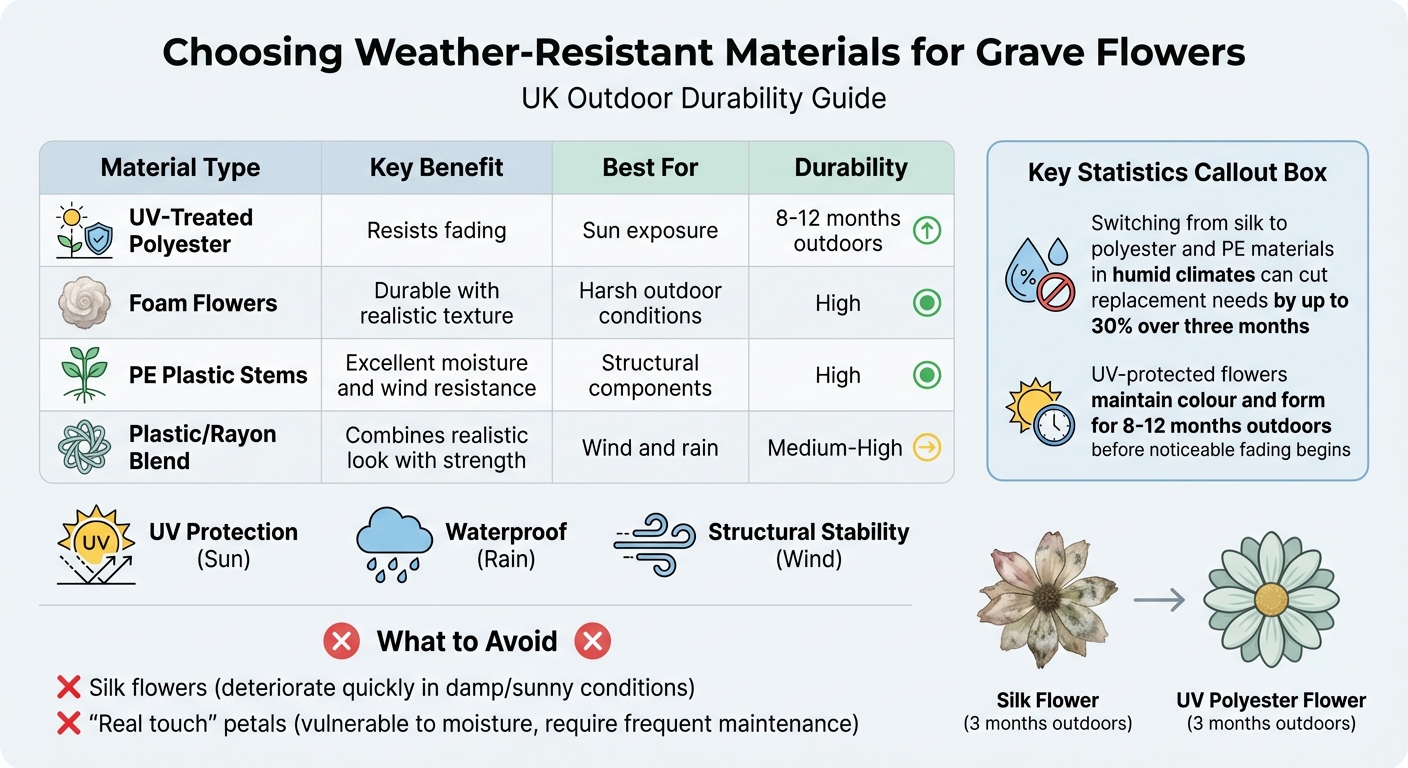
When it comes to outdoor durability, polyester with UV stabilisers is your best bet. Unlike silk, which quickly deteriorates in damp or sunny conditions, polyester resists both fading and structural damage. Artificial flowers treated with UV protection can maintain their colour and form for 8–12 months outdoors before noticeable fading begins [6].
For stems and other structural parts, polyethylene (PE) plastics excel in handling moisture, humidity, and wind [6]. Additionally, foam flowers offer a lifelike texture and durability, making them a great choice for areas with frequent rainfall and temperature shifts [1].
"Artificial flowers fade outside because UV rays and humidity damage dyes and fibres." – Botanic Blossoms [6]
When shopping, focus on flowers labelled as waterproof and UV-resistant. These coatings not only protect against the elements but also reduce upkeep [6]. Switching from silk to polyester and PE materials in humid climates can cut replacement needs by up to 30% over three months [6].
Why Construction Quality Is Key
The quality of construction plays a huge role in how well artificial flowers hold up outdoors. For example, stems with flexible wiring are less likely to break in strong winds, as they can bend rather than snap. Similarly, securely attached petals prevent quick wear and tear during heavy rain or storms.
If the display is in a windy or exposed location, weighted bases are a must. These bases help keep arrangements stable, ensuring your tribute remains upright and dignified, even in challenging weather [7].
Recommended Flower Types for Outdoor Displays
For a polished and respectful look, opt for outdoor flowers with realistic veining. Seasonal choices like tulips in spring, sunflowers in summer, and chrysanthemums in autumn bring variety to your display [1]. However, avoid "real touch" petals unless you’re ready for frequent maintenance, as they are more vulnerable to moisture [4]. These thoughtful selections will keep your tribute looking vibrant and elegant.
| Material Type | Key Benefit | Best For |
|---|---|---|
| UV-Treated Polyester | Resists fading [1] | Sun exposure |
| Foam | Durable with realistic texture [1] | Harsh outdoor conditions |
| PE Plastic Stems | Excellent moisture and wind resistance [6] | Structural components |
| Plastic/Rayon Blend | Combines realistic look with strength [1] | Wind and rain |
How to Clean and Refresh Artificial Grave Flowers
Keeping artificial grave flowers clean helps maintain their respectful appearance. Regular care prevents dirt build-up and ensures they continue to look their best. The cleaning method you choose should depend on the material of the flowers.
Cleaning Tools and Supplies You’ll Need
Start with some basic tools: a soft brush (like a paintbrush or makeup brush), microfibre cloths, and lukewarm water. For tougher cleaning tasks, you’ll need white vinegar, mild washing-up liquid, and fine salt. A spray bottle is handy for applying vinegar solutions, while baking soda can tackle outdoor odours. Compressed air or a hairdryer set to cool (held at least 30 cm away) is also useful.
"A white-vinegar and water spray is the safest, most versatile cleaner across materials." – Atlas Flowers [9]
Step-by-Step Cleaning Instructions
- Dust First: Start by removing surface dust with a soft brush or compressed air. This prevents dirt from turning into mud during cleaning.
- Plastic or Latex Flowers: Rinse these under cool running water or wipe them down with a damp cloth. For stubborn dirt, spray a 50/50 mix of white vinegar and water.
- Silk Flowers: Handle these more delicately. For dry cleaning, place the flowers in a large bag with half a cup of fine salt. Shake gently for about a minute to loosen dirt. If using water, test a hidden petal first with a damp cloth to ensure the dye doesn’t bleed. Avoid hot water, as it can warp plastic parts and cause fading.
- Drying: Always air-dry flowers in the shade to prevent colour fading and brittleness.
With regular care, your flowers will stay looking fresh and ready to face seasonal weather changes.
How Often to Clean Your Flowers
Light maintenance every week or two can keep dirt from accumulating, especially if the flowers are near busy roads where dust settles faster. A deep clean every three months (once per season) is ideal for keeping them in top shape. For UV-protected flowers, avoid moisture-based cleaning methods and stick to a soft brush or compressed air to protect the coating.
To complete your care routine, adjust your cleaning approach based on the season and weather conditions.
| Cleaning Task | Frequency | Method |
|---|---|---|
| Surface Dusting | Every 1–2 weeks | Soft brush or compressed air |
| Deep Clean | Once per season | Lukewarm water rinse or salt shake |
| Debris Removal | After storms | Manual removal or compressed air |
Seasonal Care Tips for Year-Round Maintenance
Each season brings its own set of challenges when it comes to maintaining artificial grave flowers. Adapting your care routine to these changes can help keep arrangements looking vibrant and fresh. By combining thoughtful material choices with seasonal adjustments, you can ensure your tribute remains beautiful no matter the weather. Below are tailored tips for each season to help you preserve your arrangements.
Spring: Managing Rain and Vegetation Growth
Spring often means heavy rain and the rapid growth of surrounding plants, both of which can affect the appearance of your flowers. Opt for waterproof or water-resistant flowers if your area sees frequent spring showers. Materials like polyester, nylon, or plastic-coated fabrics are excellent for resisting water damage, unlike more delicate silk options [1].
Spring winds can be another concern, so consider using weighted pots to keep arrangements stable. As one customer shared: "I opted for added weight as it can be quite windy and exposed on my Mum’s grave plot. The colours are vibrant and cheerful and should last a while" [7]. After rain, clean flowers with a 50/50 mix of water and vinegar to remove dirt [7]. For detailed petals where debris tends to collect, compressed air is a gentle and effective cleaning option [5][7].
Summer: Shielding Against Sun Damage
Extended exposure to direct sunlight can cause artificial flowers to fade, especially if left in the sun for more than two hours at a time [10]. To counter this, choose flowers with built-in UV protection or apply a clear UV-protective spray before placing them outdoors [3][10]. Positioning arrangements in partially shaded areas – such as near larger monuments or under trees – can also help minimise sun exposure.
If your flowers are in full sun, rotate the arrangements occasionally to ensure the colour fades evenly [2][5]. Avoid placing flowers near reflective surfaces or dark stone, as these can amplify heat and damage materials like plastic and silk [4][10]. During the hottest months, consider switching to heat-resistant artificial flowers, saving more delicate silk varieties for cooler periods [3].
Autumn and Winter: Defending Against Debris and Frost
As temperatures drop, your focus should shift from sun protection to shielding flowers from debris and frost. Regularly clear fallen leaves and other debris to prevent staining or discolouration. To guard against frost damage, wrap pots in bubble wrap to keep them insulated [11][12][13].
High winds are common during these seasons, so use grave vases with built-in ground spikes to anchor arrangements securely [14]. If you’re using multiple pots, grouping them near a wall or larger monument can create a slightly warmer microclimate [12]. Elevating containers with pot feet or bricks improves drainage and prevents them from freezing to the ground [12]. Avoid covering flowers with plastic, as it traps moisture and can lead to mould. Instead, opt for breathable covers like horticultural fleece for extra protection [5][12].
Caring for Grave Pots and Supporting Structures
After cleaning artificial funeral flowers, it’s equally important to maintain the pots and supporting structures. While clean flowers keep the display vibrant, well-cared-for pots and supports ensure the overall memorial remains respectful and dignified. Neglected pots can accumulate algae, moss, and dirt, which detract from the display’s appearance. Regular upkeep during visits to the gravesite also helps you spot any structural issues early, keeping everything in good condition [3].
Cleaning and Repairing Pots and Vases
To clean pots and vases, a simple solution of 50/50 white vinegar and water works wonders. This mixture effectively removes grime and naturally disinfects surfaces [9]. Use a soft brush or a microfibre cloth to gently scrub away dirt without scratching delicate materials like ceramic or stone.
Granite containers should ideally be sealed when purchased to prevent moisture from seeping in [16]. Marble containers, though elegant, are more prone to scratches and chips, so they require extra care during cleaning [16].
Plastic inserts, often used inside pots, need replacing every 4–6 years due to wear from weather exposure [16]. Minor decorative damage can be fixed with floral adhesive, but if a plastic insert becomes brittle or cracks, it’s usually better to replace it than attempt repairs [16][17].
Once the pots and vases are clean, make sure your flower arrangements are secured to stay intact through all weather conditions.
How to Secure Flower Arrangements Properly
Wind can easily displace outdoor grave pots, especially in open or exposed areas [3]. Heavier vases made from materials like granite, stone, or ceramic naturally provide more stability. For lighter containers, adding weight by filling the base with sand or pebbles helps keep them steady [3][7][16].
Inside the vase, use dry floral foam or styrofoam blocks cut to fit snugly. The foam should be slightly larger than the vase opening so it stays firmly in place – if it feels loose, wrapping it in plastic can help create a tighter fit [15][16]. Attach flower stems to wooden picks using wire and weatherproof floral tape to ensure they remain secure even in damp conditions [15].
For extra stability, consider using specialised headstone flower anchors that attach arrangements directly to the stone without causing damage. However, always check your cemetery’s rules before using adhesives or metal brackets, as many cemeteries restrict permanent modifications to headstones [15][16].
Fixing Damage and Knowing When to Replace Flowers
Artificial flowers, no matter how carefully you maintain them, can encounter issues as time passes. Dust and dirt often dull their colours, giving the appearance of fading. Luckily, a good cleaning session can usually restore their brightness [8][2].
Simple Repairs for Minor Damage
If your artificial flowers have misshapen petals, try using a hairdryer on a low, cool setting. Hold it about 30 centimetres away and gently reshape the petals without risking heat damage. Claire Sewell from Hudson Home recommends this method:
"Use a hairdryer on a low, cool setting to help reinvigorate the flowers and restore their natural shape" [2].
For discoloured flowers, try placing the heads upside down in a large plastic bag with half a cup of fine salt. Seal the bag and shake it gently. The salt works as a mild abrasive, removing deep-seated dirt [8]. If the flowers look dull rather than dirty, a clear coat spray can bring back their shine [17].
Another tip: rotate your arrangements regularly. This helps prevent uneven wear and fading caused by prolonged exposure to sunlight on one side [2]. By addressing issues early and keeping up with routine care, you can extend the life of your artificial flowers. However, when cleaning and small fixes no longer work, it’s time to consider replacing them.
When to Replace Your Artificial Flowers
Unfortunately, some damage is beyond repair. If your artificial flowers are permanently misshapen from being crushed or if the material starts breaking down due to heat or moisture, replacement is the best option [2]. Maggie from Artificial Flowers Store points out:
"Everything has a shelf life, and your artificial flowers are no exception. They have one of the shortest lifespans of all flower types" [17].
Key signs that it’s time to replace your flowers include irreversible fading from sun exposure, brittle materials that snap easily, or lingering odours that resist cleaning [17][9]. If mould or persistent damage remains even after cleaning, it’s a clear signal to replace them [2]. Handmade Wreaths UK also advises caution:
"Avoid using a wet cloth, as moisture can loosen adhesives or damage delicate faux petals" [5].
Once adhesives fail, repairs become impossible, making replacement the only viable solution.
Conclusion
Keeping artificial grave flowers looking their best all year round doesn’t require much – just a bit of regular care. A quick dusting, shielding them from excessive sunlight, and occasional cleaning with lukewarm water and a mild detergent can go a long way. Adjusting your care routine for seasonal changes like rain, frost, or debris ensures your arrangement stays pristine and respectful [2][5][7].
Taking the time to maintain these arrangements is a heartfelt gesture. As FlowerAnchor puts it:
"Whether you use fresh or artificial flowers, the time and effort you put into maintaining the arrangements show your enduring love and respect." [3]
Carole’s experience with a weighted grave pot is a great example. She shared her review in January 2026, noting how the added weight kept her arrangement secure in a windy location. She also appreciated how the "vibrant and cheerful" colours stayed bright throughout the winter months [7].
When cleaning and repairs no longer do the trick, replacing your flowers is a simple way to keep your tribute looking dignified. But with proper care, high-quality artificial flowers can remain stunning for years [7].
FAQs
How do I stop artificial grave flowers fading in the sun?
To keep artificial grave flowers looking their best, try to limit their time in direct sunlight by placing them in shaded areas or spots with indirect light. If sunlight exposure is unavoidable, rotate them occasionally to prevent one side from fading faster. For added durability, consider using a UV-resistant spray or choosing flowers made from weather-resistant materials. Also, make it a habit to clean them regularly to remove dust and dirt, which can make them look dull over time.
What’s the safest way to clean silk vs plastic grave flowers?
For silk flowers, use a soft, dry microfibre cloth to gently remove dust. For hard-to-reach spots, a soft-bristled brush works well. Avoid using water unless you’ve confirmed the colours won’t bleed.
When it comes to plastic flowers, a soft cloth or feather duster is perfect for regular dusting. For a more thorough clean, you can use a mild solution of white vinegar and water – just make sure to test it on a hidden area first to ensure it won’t damage the material.
How can I secure grave flowers so they don’t blow away?
To keep grave flowers from being swept away by the wind, you can use a few practical techniques. Secure the arrangements with floral foam, wooden picks, or floral tape to anchor them firmly. Choose vases that are designed to handle windy conditions, and for extra stability, place weights like stones around the base of the vase. These simple steps work together to keep the flowers in place, even when the weather is less than calm.