How to Choose Flowers for a Funeral Service
Selecting the right flowers for a funeral is a meaningful way to honour someone’s life and express emotions when words fall short. Whether you’re considering their personality, cultural traditions, or the symbolism of specific blooms, thoughtful choices can create a tribute that feels personal and respectful. Here’s what to keep in mind:
- Match flowers to their personality: Reflect their style, passions, or favourite colours.
- Understand cultural customs: Different religions and traditions have specific preferences or restrictions regarding funeral flowers.
- Symbolism matters: Lilies represent purity, roses convey love, and carnations symbolise remembrance.
- Decide between fresh and artificial flowers: Fresh flowers offer natural beauty but are short-lived, while artificial options are durable and low-maintenance.
- Choose the right arrangement: Options include coffin sprays, wreaths, heart designs, or custom tributes shaped to reflect their life.
- Plan delivery early: Coordinate with florists and funeral directors to ensure timely and accurate delivery.
Let’s talk about sympathy flowers
sbb-itb-2970de5
Match Flowers to the Deceased’s Personality
Floral tributes can be a deeply personal way to honour someone who has passed. Instead of choosing standard arrangements, consider what made them special – their personality, style, passions, and favourite colours.
Think About Their Personal Style
The overall style of the arrangement can reflect the individual’s preferences. For someone with a classic, formal taste, traditional bouquets of roses or lilies arranged neatly might feel appropriate. On the other hand, if they had a love for nature or a more laid-back personality, a rustic arrangement with wildflowers, branches, leaves, or even moss could be a beautiful tribute, or you might choose artificial funeral flowers for a lasting memorial [1][2].
Certain flowers also carry symbolic meanings. Gladioli, for example, represent strength and might be a thoughtful choice for someone known for their resilience [6][7]. If the deceased shared a name with a flower, such as Rose, Lily, or Daisy, including that bloom in the arrangement adds a personal and meaningful touch [3].
These thoughtful details ensure the floral tribute feels uniquely connected to the individual.
Use Their Favourite Flowers or Colours
When selecting flowers, think about the colours they surrounded themselves with – perhaps their wardrobe or home décor offers some clues. As CPJ Field explains:
"If they were always dressed in pink, funeral flowers in this colour would be fitting" [2].
A poignant example of this was seen at Queen Elizabeth II’s funeral in September 2022. Her wreath included handpicked blooms and foliage from royal estates, reflecting her love of gardening [2].
However, some favourite flowers might not be in season. Poppies, for instance, can be hard to find at certain times of the year [2]. If this happens, consider substituting with flowers in their favourite colour or adding coloured ribbons or foliage for a similar effect [1].
In the next section, we’ll look at how traditions and beliefs can shape your floral choices even further.
Respect Cultural and Religious Customs
Funeral traditions vary widely across different cultures and religions, and what might be appropriate in one setting could be unsuitable in another. Taking the time to understand these customs can ensure your choice of flowers is both respectful and meaningful.
For example, Christian services – whether Catholic, Protestant, or Anglican – typically welcome a variety of floral styles and colours. White lilies are a classic choice, symbolising purity and the soul’s restoration, while pink carnations hold special meaning in Catholic traditions, representing the Virgin Mary’s tears.
In Buddhist funerals, white flowers are preferred as they signify purity and spiritual enlightenment, whereas red flowers are usually avoided. Similarly, Eastern Orthodox services often favour white flowers for their simplicity and serene symbolism.
Some traditions, however, do not include flowers at all. In Jewish customs, flowers are not used at funerals or during the seven-day mourning period, Shiva. Instead, it’s traditional to bring food baskets or make charitable donations. Hindu customs also discourage mourners from bringing flowers, as the family provides them for specific rituals. For Muslim funerals, simplicity is highly valued. Since floral tributes may be seen as overly extravagant, it’s wise to seek the family’s consent beforehand.
Mormon funerals generally accept most flowers, but arrangements shaped like crosses or crucifixes should be avoided, as these symbols are not part of their faith. In East Asian traditions, especially within Chinese and Japanese communities, white chrysanthemums are commonly chosen, as they are closely associated with grief and mourning.
When in doubt, check the obituary for guidance, such as notes on "family flowers only" or requests for charitable donations. If anything remains unclear, consult the funeral director. By considering these cultural and religious nuances, alongside the symbolism of different flowers, you can create a tribute that feels both respectful and heartfelt.
Learn What Different Flowers and Colours Mean
Flower symbolism can help you select arrangements that express the right emotion, while colours add a personal and thoughtful touch to your tribute.
What Popular Funeral Flowers Represent
Lilies are a classic choice for funerals in the UK, symbolising purity and the return of innocence to the soul [8]. Floral designer Eddie Baker explains that lilies embody the restoration of the departed’s soul [10]. In Christianity, white lilies are linked to the Virgin Mary, representing purity and radiance [9].
Roses are incredibly versatile, with their colours carrying distinct meanings. Red roses signify deep love, respect, and devotion, while white roses reflect humility and innocence [8]. Pink roses convey gratitude and grace, and yellow roses represent strong friendship [8].
"A single rose in a bouquet of flowers is a particularly heartrending way to express abiding love for the deceased" [8].
Carnations are cherished for their long-lasting blooms and fragrance, symbolising love and affection [8]. Pink carnations hold a special meaning, as author Ed Gallois notes:
"In the language of flowers pink carnations are supposed to mean ‘I will never forget you’" [4].
White carnations are often chosen for children’s funerals, representing purity and innocence [8].
Chrysanthemums are a symbol of honour and sympathy in the UK and US. However, in many European and Asian cultures, they are closely associated with death and mourning [9]. Gladioli stand for strength of character, integrity, and sincerity and are often featured in large fan-shaped arrangements [8]. Orchids convey eternal love, beauty, and strength [9], while tulips and daffodils symbolise hope, renewal, and fresh starts – perfect for celebration of life services [8].
These meanings can guide your flower choices, helping you create a tribute that aligns with the tone and significance of the service.
Pick Colours That Match the Service Tone
White is a traditional choice that evokes serenity and suits solemn occasions.
Red symbolises deep love, respect, and admiration [8]. Bright red suggests vitality and beauty, while dark crimson conveys sorrow and grief. Red flowers are often chosen by those wishing to express profound affection or respect, such as spouses or life partners.
Pink reflects gratitude, appreciation, and grace [8], offering a softer way to convey affection. Yellow represents friendship, happy memories, and new beginnings [8], making it a popular choice for lively celebrations of life or for honouring someone with a vibrant spirit.
When selecting colours, consider your relationship with the deceased and the emotional tone of the service. Traditional services often feature white and pastel hues, while celebrations of life embrace bold, cheerful colours that reflect the individuality and joy of the person being remembered.
Compare Fresh and Artificial Flowers
Fresh vs Artificial Funeral Flowers Comparison Guide
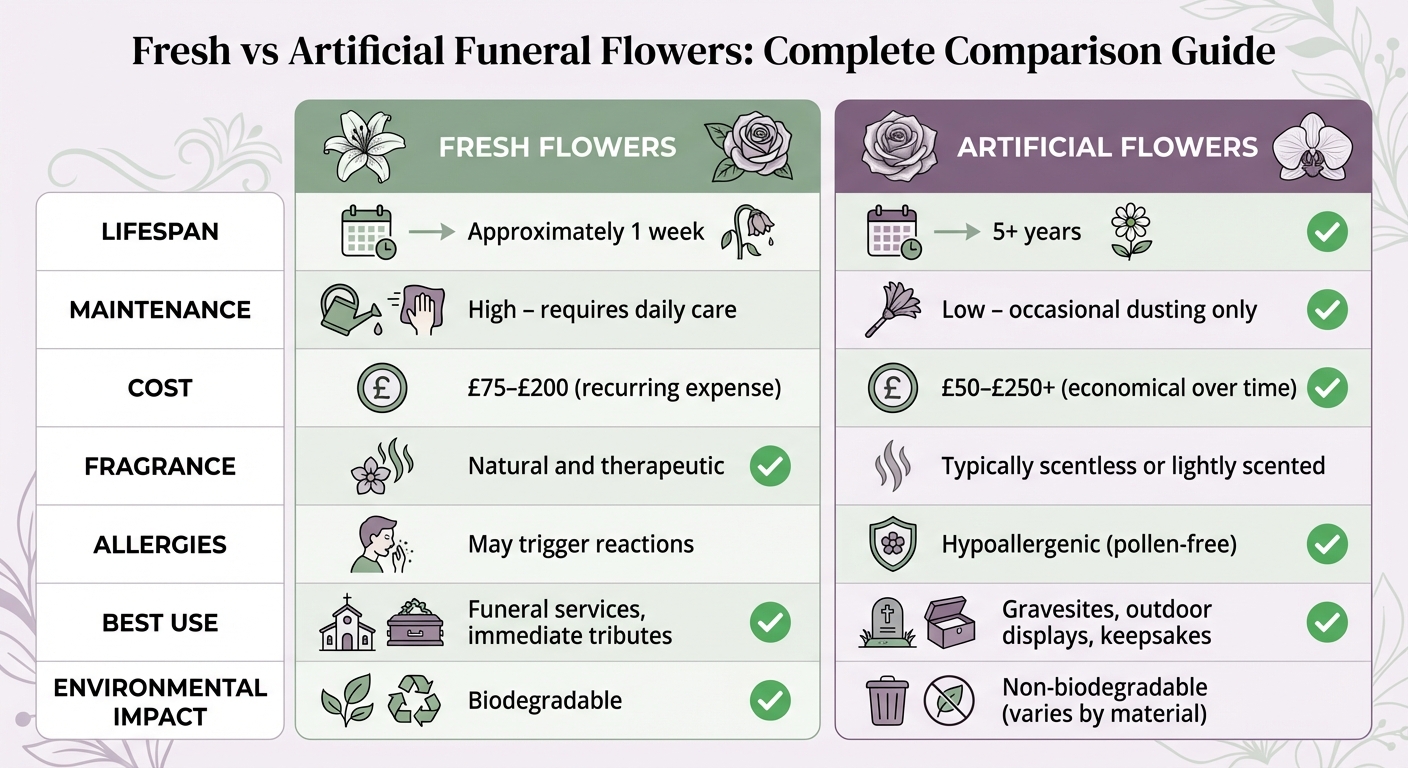
Choosing between fresh and artificial flowers for a floral tribute often comes down to balancing their aesthetic appeal with practical considerations like longevity and maintenance. Fresh flowers, with their natural beauty and scent, typically last about a week [15], while artificial flowers can maintain their appearance for five years or more [16]. Below, we break down the advantages of each option to help you decide.
Fresh flowers offer a natural fragrance and a tactile quality that artificial flowers cannot replicate. They cost between £75 and £200 [15], making them a fitting choice for short-term displays. Another advantage is their biodegradable nature, which allows them to decompose naturally, leaving little environmental footprint [1][5].
In the UK, fresh funeral flowers are deeply rooted in traditions, symbolising the natural cycle of life. Many families find comfort in their fleeting beauty, though their short lifespan can be a drawback for outdoor memorials or gravesites exposed to unpredictable weather.
Artificial flowers, on the other hand, are durable, weather-resistant, and require minimal upkeep. They are hypoallergenic and only need occasional dusting. While their initial cost ranges from £50 to £250+ [13][15], they are more economical in the long run [12][16].
"Artificial funeral flowers are gaining in popularity, as they are maintenance free and will remain beautiful for years!"
A growing trend is blending high-quality artificial flowers with fresh greenery. This creates a realistic appearance while offering the durability needed for outdoor arrangements [11][12]. For those considering outdoor tributes, UV-treated artificial flowers are a smart choice to prevent fading in sunlight [13][16]. Additionally, these arrangements can double as keepsakes, reused for special occasions like anniversaries or birthdays [14].
"The notion of ‘fake by default’ is over: it’s now appreciated, intentional, and valued for what it adds to your home. Maybe true luxury is simply enjoying it without any upkeep."
- Décors Véronneau [13]
Artificial flowers are also a practical option for allergy sufferers, as they are pollen-free [12][16]. They are safer around pets, too, since they lack the toxins found in some fresh flowers like lilies or tulips [12]. For multi-day events or services held in venues without climate control, artificial arrangements maintain their appearance without requiring water or refrigeration [17][18].
Fresh vs Artificial Flowers: Side-by-Side Comparison
| Feature | Fresh Flowers | Artificial Flowers |
|---|---|---|
| Lifespan | Approximately 1 week [15] | 5+ years [16] |
| Maintenance | High – requires daily care [15] | Low – occasional dusting [11] |
| Cost | £75–£200 (recurring expense) [15] | £50–£250+; more economical over time [13][15][12] |
| Fragrance | Natural and therapeutic [15] | Typically scentless or lightly scented [11] |
| Allergies | May trigger reactions [12] | Hypoallergenic (pollen-free) [16] |
| Best Use | Funeral services, immediate tributes [11][15] | Gravesites, outdoor displays, keepsakes [13][16] |
| Environmental Impact | Biodegradable | Non-biodegradable (varies by material) |
Choose the Right Type of Arrangement
Selecting the right floral arrangement is an important way to honour the deceased and reflect your relationship with them. The type of arrangement you choose also determines how and where it will be displayed, adding depth to the tribute.
Coffin sprays are among the most prominent floral tributes. These diamond-shaped arrangements, typically around 150 cm long, are placed directly on the casket and are traditionally chosen by immediate family members [19][23]. They often set the tone for the overall floral theme of the service.
For those outside the immediate family, there are other meaningful options. Wreaths are a versatile choice for friends and extended family. Their circular design represents eternal life and unending love, and they’re often displayed on a stand near the coffin or placed at the graveside after the ceremony [20].
If you’re looking for a more intimate expression, heart wreaths are a touching option. These can be designed in an "open" style, with a hollow centre symbolising a broken heart, or a "closed" style, fully filled to signify complete love [21]. Heart wreaths are often chosen by partners or children. Stems From Heaven offers these starting at £50, making them both meaningful and affordable.
For a truly personal touch, custom tributes allow you to celebrate the individuality of the deceased. Letter tributes, such as "MUM" or "DAD", are often displayed in the hearse window during the procession [19]. If you’re looking for something even more unique, custom shapes can reflect hobbies, passions, or other personal elements. Stems From Heaven offers bespoke designs, including angel wings priced at £80, which provide a visually striking and comforting tribute. Keep in mind that intricate custom designs should be ordered 3–5 days in advance [21].
When selecting large arrangements like coffin sprays or letter tributes, it’s important to coordinate with the immediate family and the funeral director. Ensure that flowers are delivered at least two hours before the service to avoid any last-minute issues [22][24]. Once you’ve chosen the arrangement, the next step is to consider delivery and presentation, which we’ll cover in the following section.
How to Order and Arrange Delivery
Order Early to Ensure On-Time Delivery
Once the funeral date is set, placing your order immediately is key. This not only ensures a broader selection of flowers but also allows time for blooms to open and for any personalised designs to be completed.
For standard arrangements, aim to order at least 24 to 48 hours before the service. However, for customised letter tributes, it’s best to provide 7–10 days’ notice, giving florists enough time to perfect your design. As Sally Pearce, a florist at Polly’s Garden, explains:
"Ordering in plenty of time ensures the widest choice of flowers and designs. Some flowers take a long time to open, some design shapes need to be ordered in or constructed, so the sooner you order the better."
When placing your order, include all essential details: the deceased’s full name, the funeral date and time, and the funeral director’s name and address. Double-check this information carefully, especially when multiple services are scheduled on the same day. If your card message isn’t ready at the time of ordering, make sure to provide it before the delivery deadline.
After confirming your order, reach out to the funeral director to finalise delivery arrangements.
Check Details with the Funeral Director
After placing an early order, it’s important to confirm delivery details with the funeral director. Funeral flowers are usually delivered directly to the funeral director’s premises rather than the service venue, as they are transported to the service in the hearse. Florists often work closely with funeral directors to coordinate delivery times, particularly for early morning services or when multiple arrangements are involved.
Before ordering, check the obituary or funeral notice for any specific requests from the family, such as “family flowers only” or a preference for charitable donations instead of flowers. If the service is a woodland burial, let your florist know immediately, as this will influence both the design of the tribute and the delivery process. Florists generally aim to deliver at least two hours before the service to ensure everything is ready. As Sally Pearce notes:
"Florists are very familiar with delivering funeral flowers, so you don’t need to worry about the flowers getting there in time. If necessary, I liaise with the funeral director… That way we can be sure everything runs smoothly on the day."
Conclusion
Funeral flowers serve as a heartfelt way to honour a life and convey emotions that words often can’t capture. By keeping the deceased’s personality, favourite colours, and hobbies in mind, you can create a tribute that feels deeply personal. Whether it’s vibrant sunflowers to celebrate a joyful life or the timeless elegance of white lilies for a traditional service, every flower tells a story through the symbolic language of floriography [4].
It’s important to respect traditions, check for any family preferences mentioned in obituaries, and use floral symbolism to add depth to your tribute. For instance, red roses symbolise profound love and sorrow, while gladioli represent strength of character – every bloom carries its own message [4].
Fresh flower arrangements bring natural beauty and fragrance to the service, while high-quality artificial flowers provide a practical and lasting option for graveside tributes [4][25].
For those considering long-term options, Stems From Heaven offers handcrafted artificial funeral flowers designed for enduring graveside remembrance. Their range includes heart-shaped wreaths starting at £50 and coffin sprays priced between £120 and £150. These durable arrangements offer a meaningful, low-maintenance alternative that stands the test of time.
Plan your tribute early by coordinating with your florist and funeral director to ensure everything arrives smoothly, allowing you to focus on cherishing your loved one’s memory.
FAQs
Who should choose the coffin spray?
The coffin spray is typically selected by the immediate family, as it serves as the main floral tribute, placed prominently on top of the coffin. Meanwhile, children or grandchildren often choose items like hearts, cushions, or letter tributes to express their connection. Close friends and other relatives may prefer wreaths, tied sheaves, or posies. These floral arrangements allow for a personal touch, reflecting the unique bond shared with the deceased.
What if their favourite flowers aren’t in season?
If their favourite flowers aren’t in season, you could opt for blooms in their favourite colour or flowers that hold personal meaning, such as their birth flower or ones that mirror their personality. Another option is to incorporate seasonal flowers with symbolic meaning or combine them with flowers that have special significance to the deceased or their family. The goal is to craft a tribute that feels heartfelt and considerate.
Should I ask the family before sending flowers?
When sending flowers for a funeral, it’s thoughtful to check with the family first. Often, their preferences are mentioned in announcements, obituaries, or invitations. If you’re uncertain, it’s best to reach out to them directly. This ensures your gesture respects their wishes and provides a fitting tribute.