
Artificial Flowers for Graves: Preventing Damage
Artificial grave flowers often face damage from sunlight, rain, wind, and seasonal changes, which can fade colours, weaken materials, and reduce their lifespan. To keep these tributes looking their best, you can:
- Use UV-resistant sprays to shield against sun damage, though they require regular reapplication (6–12 months) and may leave a sticky finish.
- Opt for fade-resistant materials like UV-stabilised polyester, which last 2–5 years and require less upkeep.
- Place flowers in shaded or sheltered areas to reduce exposure to harsh weather.
- Perform regular maintenance, such as cleaning and rotating arrangements, to prevent dirt build-up and uneven fading.
Combining these methods – such as using fade-resistant materials with occasional UV spray – can extend the lifespan of artificial flowers to over five years. This approach balances cost, durability, and maintenance effort, ensuring graveside tributes remain vibrant and respectful for longer.
| Method | Longevity | Cost | Effort | Effectiveness |
|---|---|---|---|---|
| UV-resistant sprays | 1–2 years extra | £5–£15 per bottle | Easy (10–15 mins) | Moderate (70–80%) |
| Fade-resistant materials | 3–5 years | £30–£100 upfront | Minimal upkeep | High (90%+) |
| Shade & shelter | 2–4 years extra | £10–£150 upfront | Moderate effort | High (80–90%) |
| Regular maintenance | 1–3 years extra | £5–£20 annually | Time-intensive | Varies (60–85%) |
For long-lasting results, arrange grave flowers that last by choosing fade-resistant materials and enhance protection with UV sprays, shade, and routine care. This layered strategy ensures a dignified and durable tribute.
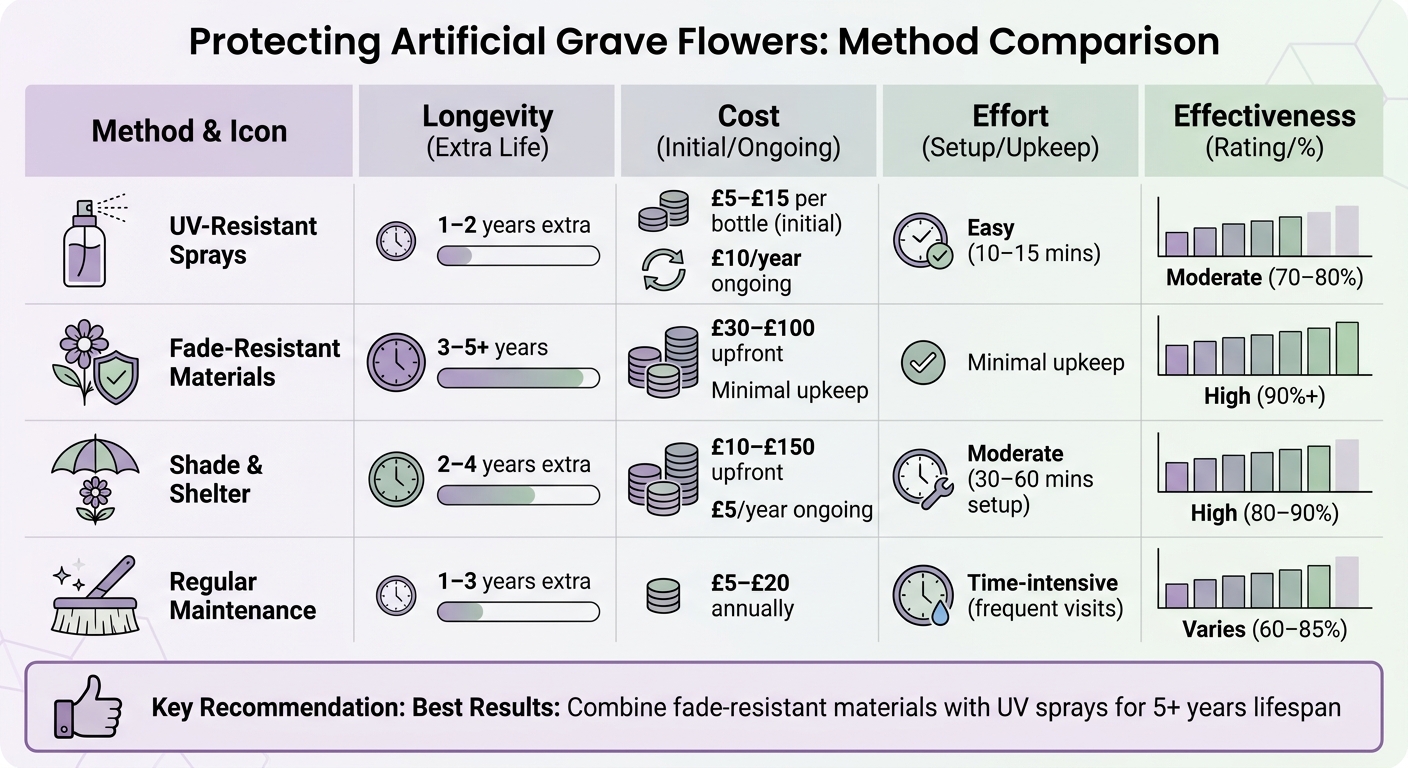
Comparison of 4 Methods to Protect Artificial Grave Flowers
1. UV-Resistant Sprays
UV-resistant sprays are post-purchase treatments designed to protect artificial funeral flowers from sun damage. These sprays create a transparent layer – usually made of acrylic, silicone, or fabric-based materials – that blocks UV rays. However, their effectiveness depends on the product, how well you apply it, and whether every surface is evenly covered.
Ease of Application
Using UV sprays requires a bit of care. Start by cleaning the flowers with a soft brush to remove any dust or debris. When applying, hold the spray 20–30 centimetres away and use smooth, sweeping motions to ensure an even coat.
Alick Burnett, Managing Director at Blooming Artificial, cautions: "Sprays may miss or not apply an even protective layer on the foliage which may result in patchy UV damage" [2].
Once applied, let the flowers cure in a shaded area for 24–48 hours before placing them outdoors [3]. While this method can work well, it has its limitations compared to other UV protection approaches.
Durability
Sprays provide a surface-level barrier, but this protection is less dependable over time compared to UV stabilisers built into the materials. The layer can wear unevenly, especially in harsher conditions.
Blooming Artificial warns: "Sprays such as this can also leave a sticky finish that attracts dust and results in an uneven finish" [2].
Silicone-based sprays tend to hold up better than acrylic ones, offering more flexibility and water resistance. However, they often leave a shinier finish, which may not suit all preferences.
Longevity
One downside of UV sprays is the need for regular reapplication every 6–12 months [3]. This makes them better suited as a secondary layer of protection for flowers placed in sheltered areas rather than a primary solution for fully exposed gravesites. Environmental factors like altitude, humidity, and sunlight reflection from nearby surfaces can speed up the breakdown of the protective layer, meaning you’ll need to monitor and reapply more frequently.
Cost
Acrylic sprays are the cheapest option, while silicone-based versions cost slightly more due to their added durability. Specialised foliage sealers are the most expensive, and frequent reapplications can make the overall cost add up over time. Balancing cost and durability is key when choosing the right spray for your needs.
sbb-itb-2970de5
2. Fade-Resistant Materials
Unlike surface treatments, fade-resistant materials incorporate UV protection directly during production, making them a long-lasting solution.
These materials are crafted using high-quality polyester, UV-stabilised plastics, or silk-like synthetics, all of which include protective additives. By embedding UV inhibitors directly into the material, they offer consistent and reliable protection against the sun’s rays.
Durability
Top-tier fade-resistant materials maintain 80–90% of their original colour even after three years of outdoor exposure. In contrast, standard artificial flowers typically lose 30–50% of their vibrancy within just one year. UV-stabilised polyester performs particularly well in the UK’s weather conditions, resisting both fading and moisture damage. Since the UV protection is built into the material, it doesn’t wear off like surface sprays, ensuring the flowers retain their appearance over time.
Longevity
In the UK, fade-resistant artificial flowers last 2–5 years, far surpassing the 6–12 months lifespan of standard options. The UK’s frequent cloud cover and seasonal weather variations help reduce intense UV exposure, extending their durability. Providers like Stems From Heaven design their arrangements specifically for UK graveside conditions, ensuring they can withstand challenges like rain, frost, and urban pollution.
Cost
Fade-resistant artificial flowers are priced 20–40% higher than standard versions, with arrangements typically ranging from £30 to £100 or more. While the upfront cost is greater, their extended lifespan makes them more economical in the long run. A fade-resistant arrangement lasting three years saves money compared to replacing standard flowers annually, especially when accounting for the time and effort involved in regular maintenance visits.
Ease of Application
Installing fade-resistant flowers is as straightforward as placing standard artificial arrangements. Simply secure the stems into grave vases, urns, or ground-mounted holders using floral foam or wire. These materials may feel slightly stiffer due to their protective coatings, so handle them gently to avoid creasing. Pre-arranged bouquets and wreaths arrive ready to use, taking just 10–15 minutes to install, regardless of your level of experience.
3. Shade and Shelter Techniques
Placing artificial flowers in shaded or sheltered spots is a smart way to limit their exposure to direct sunlight and harsh weather. Using natural or structural protection helps minimise UV damage and weathering, working alongside chemical and material-based defences to keep arrangements looking their best.
In many UK graveyards, lanterns and memorial lamps serve as physical barriers against wind and rain while also filtering sunlight. These structures are often made from sturdy materials like stainless steel, granite, or heavy-duty resin, ensuring long-lasting protection.
Modern headstone designs also play a role, often featuring built-in niches or recessed coves. These provide constant UV shielding and protect arrangements from the south-westerly winds that are common in the UK.
Such protective measures enhance the durability of high-quality artificial flowers. For example, arrangements from Stems From Heaven are specifically designed to withstand the UK’s unpredictable weather, ensuring tributes remain elegant and well-preserved.
4. Regular Maintenance Practices
Even artificial flowers, known for their durability, need regular care to keep their colours vibrant and materials intact. Routine cleaning, alongside protective treatments, plays a key role in preserving their appearance over time.
Ease of Application
A quick weekly dusting is an easy way to keep your arrangements fresh. Use a microfibre cloth or a soft paintbrush, starting at the top of each flower and working downwards to prevent dust from settling on lower petals. For more stubborn dirt, a hairdryer set to cool (held about 30cm away) or short bursts of compressed air can work wonders.
Every 1–2 months, a deeper clean is a good idea. Lightly mist the flowers with cold water to remove grime, but avoid over-wetting them. For particularly dirty arrangements, try shaking them in a bag with 125ml of fine salt. This gently removes dirt without damaging the delicate surfaces.
Cost
Routine maintenance is a budget-friendly way to extend the life of your artificial flowers. Most supplies, like salt, water, old paintbrushes, or hairdryers, are likely already in your home. Even a 400ml can of compressed air, commonly available in the UK, costs between £3.50 and £12 [4]. This makes regular cleaning an inexpensive yet effective way to keep your arrangements looking their best.
Longevity
Consistent care can significantly prolong the life of your arrangements. High-quality silk flowers, when maintained properly, can stay vibrant for months [1]. Rotating arrangements occasionally helps prevent uneven fading caused by constant sun exposure on one side. Always ensure the flowers dry completely before placing them back at the graveside, as this helps prevent mould or material damage. With regular attention, arrangements like those from Stems From Heaven can maintain their elegance throughout the seasons.
Advantages and Disadvantages
When it comes to preserving floral arrangements, each method has its own strengths and limitations. Here’s a closer look at some of the most common approaches.
UV-resistant sprays are a cost-effective option, priced between £5 and £15 per bottle. A single bottle can cover 20–50 flowers and is easy to apply, making it a convenient choice for elderly visitors or those with limited mobility. However, they offer only moderate protection, with 70–80% effectiveness in preventing fading. Reapplication is necessary every 6–12 months to maintain their protective qualities.
Fade-resistant materials stand out for their durability, lasting anywhere from 3 to 5 years or more. These materials, often made with UV-stabilised polymers, provide over 90% protection against fading and weathering. Arrangements from Stems From Heaven, for example, are known for their high effectiveness. Once installed, they require minimal upkeep beyond occasional dusting. The downside? A higher upfront cost and susceptibility to cracking in extreme frost conditions.
Shade and shelter techniques range in price from £10–£20 for DIY shade cloth to £50–£150 for custom grave canopies. These methods offer 80–90% UV protection and can prolong the life of flowers by 2–4 years. However, installation can be more involved, sometimes requiring council approval for use in UK churchyards. Moisture buildup in humid conditions is another concern, as it can lead to mould. Additionally, these structures may attract vandals.
Regular maintenance involves periodic visits, typically lasting 20–30 minutes every few months. While this method is affordable, with cleaning supplies costing £5–£10 initially and around £20 annually, it can be challenging for those living far away or with mobility issues. Its effectiveness depends heavily on consistency, ranging from 60–85%. Experts note that neglected arrangements degrade up to 50% faster, highlighting the importance of routine care.
| Method | Longevity | Cost | Ease of Use | Effectiveness |
|---|---|---|---|---|
| UV-Resistant Sprays | 1–2 years extra | £5–£15 initial, £10/year ongoing | Very easy (10–15 mins) | 70–80% |
| Fade-Resistant Materials | 3–5+ years | £20–£60 initial, no ongoing | Excellent (no maintenance) | 90%+ |
| Shade & Shelter | 2–4 years extra | £10–£150 initial, £5/year ongoing | Moderate (30–60 mins setup) | 80–90% |
| Regular Maintenance | 1–3 years extra | £5–£10 initial, £20/year ongoing | Difficult (frequent visits) | 60–85% |
To achieve the best results, caretakers can mix and match methods based on their needs and circumstances. Florists from Stems From Heaven suggest combining fade-resistant materials with occasional use of UV sprays to extend the lifespan of arrangements for over five years. This approach balances upfront costs with long-term durability. In one Yorkshire cemetery, the introduction of shelters alongside regular maintenance reduced flower replacements by 40%. However, experts caution against over-sheltering, as it can lead to mildew in damp conditions.
Conclusion
Fade-resistant materials are a dependable choice for protecting artificial grave flowers, offering durability of over five years. When combined with UV-resistant sprays applied twice a year, this lifespan can extend to more than seven years – a 40% increase compared to using just one method in typical UK weather conditions [5][6]. For graves exposed to full sunlight, adding shade cloth or low-profile covers can cut direct UV exposure by 60–80%, significantly reducing petal brittleness by up to 90% in coastal areas [7]. This multi-layered approach not only improves longevity but also makes ongoing maintenance more manageable.
Taking material performance a step further, a combined strategy can significantly lower upkeep demands. Opt for fade-resistant arrangements from providers like Stems From Heaven and apply UV spray (priced between £10 and £25 per bottle) during spring and autumn. Research from a 2023 Southampton cemetery study revealed that this combination preserved flowers through four winters with 85% less fading compared to standard artificial flowers, which typically lasted only 18 months [6][7]. For those caring for graves from a distance, this approach reduces maintenance frequency while offering protection against rain, wind, and moderate sun exposure.
Simple quarterly cleaning with mild soap and a quick inspection (taking around 20–30 minutes) can further extend the lifespan of the flowers by one to two years. Combining fade-resistant materials (priced between £40 and £80) with occasional UV spray keeps annual costs under £20 while ensuring six to eight years of durability, even in the UK’s average annual rainfall of 1,500 mm [5]. These findings underline the long-term benefits of this strategy. However, neglecting maintenance can accelerate wear and tear by as much as 50%.
For those on a budget, prioritising fade-resistant materials is the best starting point, with UV spray as a secondary measure for graves in high-sun locations. To refine your approach, test these methods on a small area for three months to identify the most effective combination for your specific site. Whether your gravesite is an exposed hillside or a sheltered churchyard, adopting a layered strategy consistently outperforms relying on a single method.
FAQs
What is the best way to protect artificial flowers on an exposed grave?
Using UV protection sprays is a highly effective method for preserving artificial flowers placed on graves that are fully exposed to sunlight. These sprays act as a shield against fading and damage caused by extended exposure to the sun, helping the flowers maintain their colour and appearance for a longer period.
How can I tell if artificial flowers are truly UV-fade resistant?
To determine if artificial flowers are resistant to fading from UV exposure, look for labels indicating they are UV-resistant and crafted specifically for outdoor use. These flowers are designed to maintain their colour and look, even after extended time in the sun.
Will adding shelter cause mould or mildew on artificial flowers?
There isn’t concrete information about whether sheltering artificial flowers at gravesites can result in mould or mildew. That said, artificial flowers are typically made to withstand various weather conditions, which helps lower the chances of these issues. To keep them in good condition, make sure there’s enough airflow around the flowers and try to limit their exposure to excessive moisture for extended periods.