
UK Cemetery Rules: Can You Use Artificial Flowers in All Graveyards?
Placing artificial flowers on graves in the UK depends on the cemetery’s management. Here’s a quick summary:
- Council-run cemeteries: Generally allow artificial flowers but often restrict placement to specific areas near the headstone. Some councils may ban certain containers or remove items without notice.
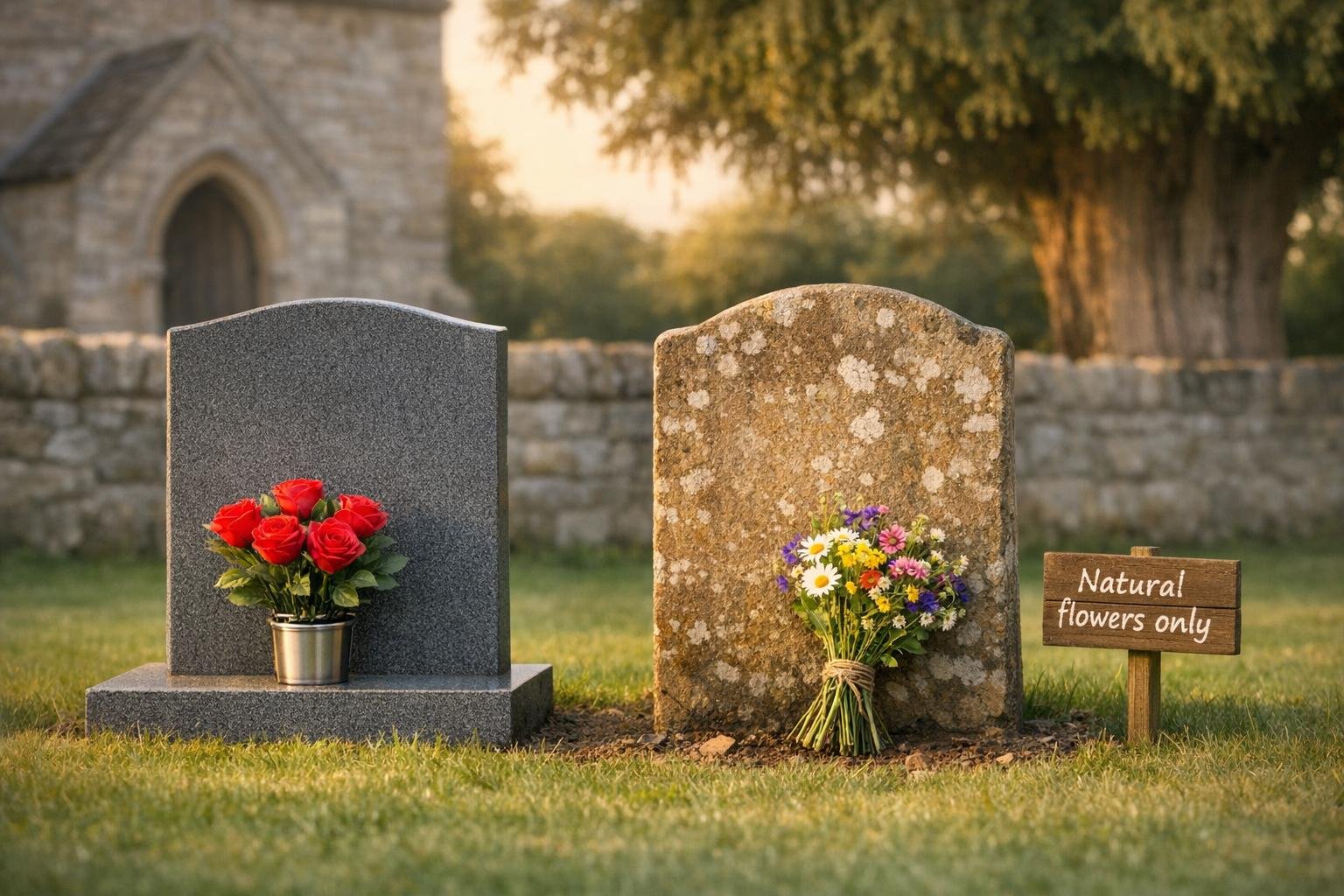
- Church of England churchyards: Typically more restrictive, with many dioceses discouraging or banning artificial flowers to preserve a natural look and reduce waste.
- Private cemeteries: Policies vary widely. Some allow artificial flowers in approved containers, while others impose stricter rules.
Always check specific rules for your chosen cemetery to avoid having items removed. Contact cemetery offices or check their websites for up-to-date guidelines. Choosing durable, weather-resistant tributes ensures they last longer and comply with regulations.
UK Cemetery Types and Artificial Flower Rules Comparison
Are Artificial Flowers Allowed in UK Cemeteries?
The rules for using artificial flowers in UK cemeteries depend on the type of cemetery and its management. Here’s an overview of the guidelines for different cemetery types:
Council-run cemeteries usually allow artificial flowers, but there are strict conditions. These cemeteries often operate as lawn cemeteries, meaning tributes must be placed in a specific area at the head of the grave to facilitate grass cutting. Certain containers may be banned due to safety or aesthetic concerns. In specialised sections, such as natural burial areas or baby cemeteries, the rules can be even more restrictive. Councils also reserve the right to remove tributes without prior notice.
Church of England churchyards typically permit artificial flowers, though there are some conditions. Dioceses often require families to remove faded arrangements to keep the area looking tidy. Seasonal restrictions are also common, meaning tributes may need to be replaced regularly.
Private cemeteries have their own policies, which can vary widely. Some require artificial flower arrangements to be placed in approved containers and may impose limits on size or placement. To avoid any issues, it’s best to contact the cemetery office or check their official website for specific decoration guidelines.
If you’re adding personal touches like photos or memorabilia, it’s especially important to confirm the rules in advance.
How to Check Artificial Flower Rules for Your Cemetery
Contact Cemetery Authorities
Start by reaching out to your cemetery’s management to confirm their rules. For council-run cemeteries, the Registrar or Cemetery Officer is your point of contact, while churchyards are usually managed by the local diocese or parish council. Private cemeteries have their own management teams.
Cemetery offices hold official plans and rulebooks that are accessible during office hours [1]. When speaking with them, ask specifically about "standard receptacles" and whether plastic or silk flowers are permitted for your grave type. Also inquire about "right to remove" policies, as authorities may clear tributes they deem unsightly [1][2].
For instance, Wirral Council requires the Registrar’s approval for all memorial applications. Lawn-type graves must keep floral tributes within an 18-inch earth border at the grave’s head. The council reserves the right to remove tributes placed in unauthorised areas or those considered "unsightly" [1]. In contrast, Buckinghamshire Council‘s Shepherd’s Lane Cemetery has a stricter approach, allowing only fresh cut flowers. Artificial flowers are entirely banned, and any prohibited items that interfere with maintenance are removed without prior notice [2].
If you can’t make direct contact, many cemeteries provide their guidelines online.
Search for Regulations Online
Most UK cemeteries now publish their rules on their websites, which makes it easier to check policies before visiting. Use search terms like "[Cemetery Name] regulations", "floral tribute rules", or "grave decoration policies" to locate relevant documents, often titled "Cemetery Rules and Regulations" or similar [1][2].
Be sure to check the publication date, as rules may change. Larger councils typically have "Bereavement Services" sections on their websites where you can download policy documents. These documents often detail what’s allowed for different types of graves, such as "lawn" or "traditional" graves. Lawn graves tend to have stricter rules to accommodate mechanical mowing [1][4][5].
If the information online is unclear or doesn’t address artificial flowers specifically, look for contact details for the Registrar or Cemetery Office. These are usually listed on the same pages.
Choose Compliant Floral Options
Once you’ve confirmed the regulations, select tributes that meet the cemetery’s requirements. Opt for weather-resistant designs, as some councils prohibit materials that can’t endure prolonged exposure to the elements [1].
If the cemetery requires flowers to be placed in approved containers, ensure you use compliant vases or holders. For example, Stems From Heaven offers artificial tributes designed to withstand British weather. Their selection includes heart tributes, crosses, and coffin sprays, all of which can be customised to honour your loved one while staying within cemetery rules.
Even when artificial flowers are allowed, keep in mind that authorities often remove items that become weathered or broken [1][3][4]. Choosing durable, high-quality tributes ensures your memorial remains intact and presentable throughout the year.
Why Choose Artificial Flowers for Gravesides
Long-Lasting and Weather-Resistant
Fresh flowers, while beautiful, often fade within 5 to 7 days, especially when exposed to the unpredictable British weather. Rain, frost, and wind can quickly take their toll. Artificial flowers, on the other hand, keep their appearance outdoors for 6–12 months — longer in sheltered spots — with a seasonal refresh keeping colours at their best. This longevity ensures your tribute remains intact and visually appealing year-round, saving you from the frequent replacements fresh flowers demand.
Minimal Maintenance Required
In many UK cemeteries, fresh flowers are typically removed within 14 days after a service. Artificial flowers, however, require only occasional cleaning, significantly reducing the need for regular visits. Considering that fresh arrangements, like casket sprays or bespoke wreaths, can range from £150 to over £300 in 2026, artificial alternatives provide better long-term value. Their low-maintenance nature also makes it easier to focus on creating a meaningful, lasting tribute without the worry of constant upkeep.
Personalised Designs and Tributes
Artificial flowers offer a level of personalisation that fresh arrangements simply can’t achieve. They can be tailored with precision, including engraved names and messages that remain intact over time. This allows your tribute to be a true reflection of your loved one’s personality and memory. For example, Stems From Heaven provides handcrafted options like heart-shaped wreaths, crosses, and coffin sprays, all designed to endure the British climate while offering customisable features. Some families even repurpose these tributes by relocating them to their home gardens, creating a lasting connection between the cemetery and everyday life .
How to Place Artificial Flowers in Compliance with Cemetery Rules
Step 1: Identify Your Cemetery Type
First, determine whether the cemetery is managed by a local council, a church, or a private organisation. Council-run cemeteries often have standardised rules, but specific areas like lawn or natural burial zones may impose stricter regulations. Churchyards typically follow Church of England guidelines, though these can differ between parishes. Private cemeteries, on the other hand, set their own policies. Once you know the type, check the cemetery’s specific floral rules directly.
Step 2: Review and Confirm the Regulations
Contact the cemetery’s bereavement services office or visit their website to confirm the regulations. If you’re unsure whether your chosen arrangement complies, it’s a good idea to get written approval. This can help avoid any issues, such as removal during routine maintenance.
Step 3: Select Approved Floral Arrangements
Choose artificial flowers that are weather-resistant and meet the cemetery’s guidelines. For example, Stems From Heaven offers handcrafted designs made for long-term placement. Options include heart-shaped wreaths, crosses, and coffin sprays. Make sure your arrangement stays within the designated head-of-grave margin to maintain the cemetery’s appearance and allow for easy groundskeeping.
Step 4: Use Suitable Containers If Required
If containers are allowed, use durable, non-fragile materials that won’t pose risks to maintenance staff. In lawn cemeteries or natural burial areas, containers may be prohibited altogether to allow for easier mowing. Always place items within the margin at the head of the grave to comply with regulations.
Step 5: Maintain and Replace Seasonal Tributes
Once your arrangement is in place, keep it compliant by following seasonal guidelines. For example, Christmas wreaths are often removed by cemetery staff after the third Monday in January. If an item is flagged as unauthorised, families are usually given a notice period – often up to 28 days – to retrieve it before it’s disposed of. Regularly checking on your tribute ensures it continues to honour your loved one respectfully throughout the year.
Conclusion
When placing artificial flowers in UK cemeteries, it’s essential to understand and follow the specific rules of your chosen site. Whether it’s a council-managed cemetery, a churchyard, or a private burial ground, each location has its own guidelines regarding materials, containers, and placement. Taking the time to learn these rules ensures your tribute remains respectful and in line with the cemetery’s requirements.
Opting for durable, weather-resistant artificial flowers is a practical choice for long-term remembrance. These arrangements are designed to endure the elements, often lasting months or even years, making them a meaningful way to honour and celebrate your loved one’s memory.
To maintain the dignity of your tribute, plan regular visits to check and replace items as necessary, ensuring everything remains in good condition and adheres to the cemetery’s regulations.
FAQs
What happens if I place artificial flowers where they’re not allowed?
If artificial flowers are placed in areas where they are not allowed, they might be taken away by the individuals responsible for maintaining the graveyard or churchyard. This is particularly common if the flowers have faded or are in poor condition, in line with churchyard regulations.
How do I find the exact decoration rules for my specific grave type?
To understand the decoration rules for a grave, check the specific regulations of the cemetery or churchyard where it is situated. Many cemeteries, whether managed by the Church of England or local councils, have clear guidelines about what is permitted. You can contact the cemetery’s administration directly or consult their official documents, such as Churchyard Regulations. These resources will outline details like acceptable decoration types, container guidelines, and maintenance rules.
Can I add a photo to a wreath or tribute without breaking cemetery rules?
According to the Church of England Churchyard Regulations 2007, graves may feature silk or high-quality artificial flowers, but plastic flowers are not permitted. Photos are acceptable if included within a wreath or tribute, provided they meet the required guidelines. However, items such as teddy bears, photographs, or balloons might be removed after 42 days. It’s essential to ensure that your arrangements follow the cemetery’s specific rules regarding artificial flowers and sentimental objects.