
Low Maintenance Grave Flowers vs High Maintenance
When choosing flowers for a gravesite, the decision often comes down to maintenance needs and personal preferences. Low-maintenance options like artificial flowers or hardy plants (e.g., heathers, daffodils) require minimal care and stay presentable for longer, making them ideal for distant or hard-to-visit locations. On the other hand, high-maintenance options like fresh lilies or annuals offer natural beauty but demand frequent attention, regular watering, and replacement due to their short lifespan.
Key points to consider:
- Artificial flowers last over five years, are weather-resistant, and require occasional cleaning. They are cost-effective long-term but lack the natural fragrance of real flowers.
- Low-maintenance real plants like heathers and cyclamen thrive with minimal care and endure UK weather well.
- High-maintenance fresh flowers provide vibrant displays but wilt quickly and incur ongoing costs (up to £1,300 annually for bi-weekly replacements).
Quick Comparison:
| Feature | Artificial Flowers | Low-Maintenance Real Plants | High-Maintenance Fresh Flowers |
|---|---|---|---|
| Lifespan | 5+ years | Seasonal/yearly regrowth | 3–7 days (up to 14 for hardy) |
| Annual Cost | One-time purchase | Minimal | £1,300+ with regular upkeep |
| Weather Impact | UV/waterproof options | Weather-resilient varieties | Sensitive to heat, rain, frost |
| Care Required | Occasional dusting | Minimal pruning/cleaning | Frequent watering/replacement |
Takeaway: If regular visits aren’t feasible, artificial flowers or resilient plants are practical, lasting choices. For those who enjoy tending to gravesites, fresh flowers offer a more hands-on, emotional tribute but require consistent upkeep.
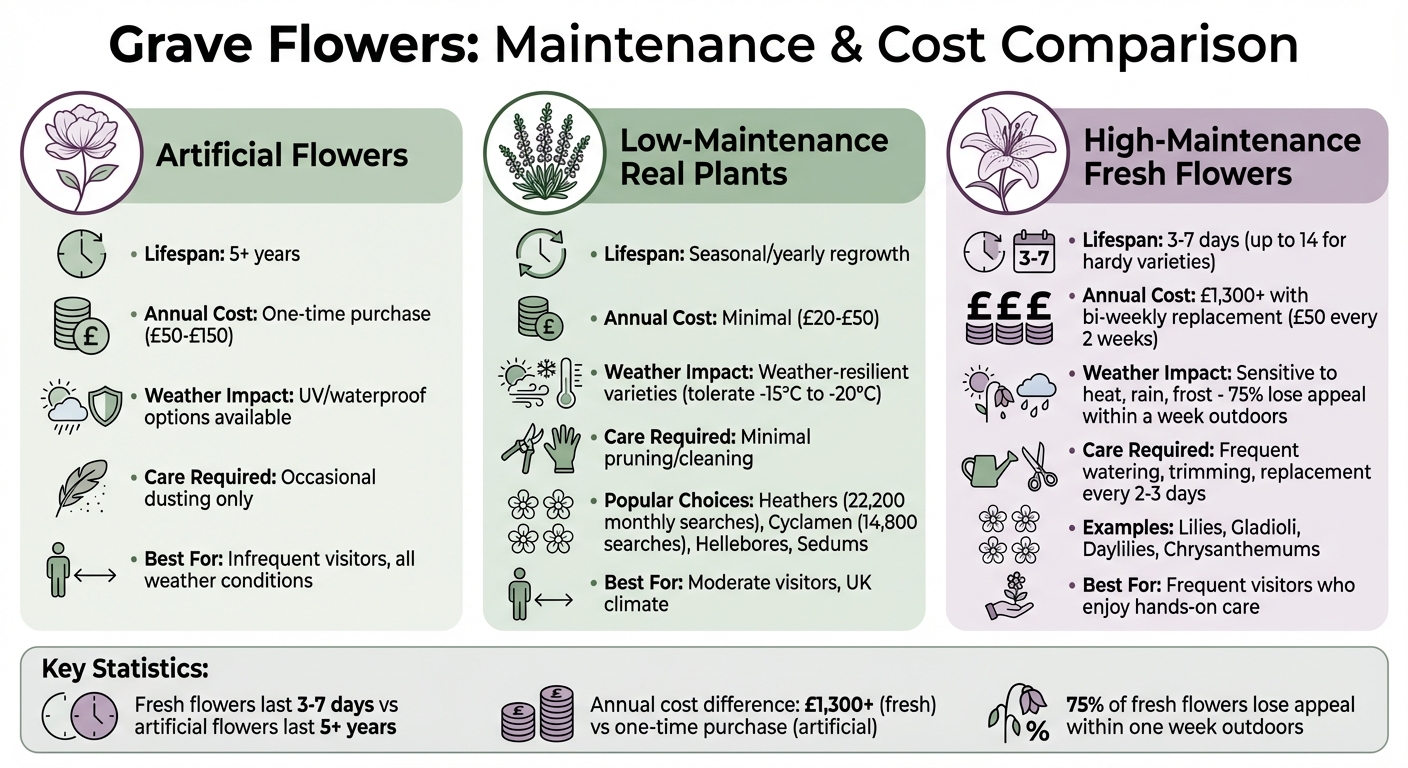
Grave Flowers Comparison: Artificial vs Low-Maintenance vs High-Maintenance Options
Low-Maintenance Flowers for Gravesites
When regular visits to a gravesite aren’t feasible, choosing low-maintenance flowers can keep the area looking cared for with minimal effort. Whether you opt for resilient real plants or durable artificial arrangements, the right choice ensures the site remains presentable throughout the year without requiring constant attention. Below are practical options, both natural and synthetic, tailored to UK conditions.
Real Flowers That Need Minimal Care
Certain plants thrive in the UK with little upkeep, making them ideal for gravesites. Heathers, available in both summer and winter varieties, are evergreen and frost-resistant, tolerating temperatures as low as -15°C. They require minimal pruning and are a popular choice, with winter heather alone receiving 22,200 average monthly searches in the UK [4].
"Heather is said to symbolise good luck, admiration, and protection, making it an excellent choice for commemorating lost loved ones." – Eflorist [4]
Bulb plants like daffodils and snowdrops are another great option. These flowers naturalise easily, returning year after year. Miniature daffodils are perfect for smaller spaces, while ferns provide a tranquil, low-maintenance green option for shaded areas.
For hardy perennials, Cyclamen stands out as the second most searched winter flower for graves, with 14,800 monthly searches [4]. Other excellent choices include Hellebores (also known as the Christmas Rose), which can endure temperatures as low as -15°C to -20°C [4], and Sedums (commonly called Stonecrop). For those who want plants that require almost no care, sempervivums (houseleeks) are ideal. As Wild Roots Garden points out:
"If you’re seeking plants that thrive on neglect, sempervivums – also known as houseleeks – are unbeatable." [5]
Before planting anything, it’s essential to check cemetery regulations, as some sites, like Arlington National Cemetery, prohibit planting entirely [3]. For permitted gravesites, potted plants are a better choice than cut flowers, as they last longer. Using anti-transpirant sprays can also help real flowers retain moisture between visits [4].
Artificial Flowers as Low-Maintenance Alternatives
If natural plants aren’t an option, artificial flowers offer a long-lasting and hassle-free solution. High-quality silk or polyester arrangements retain their vibrant appearance for over five years [2], whereas fresh flowers often lose their charm within just a week [2].
Designed to withstand harsh weather, UV-protected and waterproof artificial flowers require only occasional dusting [1] [2]. For gravesites in sunny locations, UV-resistant flowers prevent fading, while waterproof varieties are ideal for rainy areas [1]. This durability makes them especially suitable for gravesites that are difficult to visit regularly. Additionally, artificial flowers don’t attract insects or bees [1], making visits more comfortable for family members.
Though artificial arrangements may cost more initially, they eliminate ongoing expenses, offering a cost-effective option in the long run. To prevent them from being displaced by strong winds, secure lightweight arrangements with weighted pots or containers [1]. This ensures your tribute remains in place, no matter the weather.
sbb-itb-2970de5
High-Maintenance Flowers for Gravesites
Choosing high-maintenance flowers can create a vibrant and heartfelt tribute, but they require a significant commitment of time and effort. While low-maintenance options suit those who cannot visit frequently, some families prefer fresh flowers or intricate arrangements that demand regular care. These choices can make for stunning displays but need consistent attention to withstand the challenges of outdoor cemetery conditions.
Real Flowers That Need Regular Care
Annual flowers are a popular but demanding choice, as they typically last only a week in outdoor conditions and need replanting each season [3]. Families must weigh the emotional beauty of these blooms against the effort required to maintain them.
Certain flowers are especially labour-intensive. Lilies, for instance, need their water changed every two days and must be shielded from harsh sunlight to prevent wilting [6]. Gladioli demand frequent water changes and require their stems to be recut every few days to ensure proper hydration [6]. Daylilies also need regular watering and should be placed in partial shade during hot weather [6]. Even sturdier flowers like chrysanthemums and daisies require attention, including water changes every 2–3 days and the removal of submerged leaves to avoid bacterial growth and rot [6].
Cemeteries often present challenging environments for fresh flowers. Exposure to direct sunlight, strong winds, and sudden temperature shifts can accelerate wilting and dehydration [6]. Additionally, without regular maintenance, standing water can become a breeding ground for bacteria, leading to stem rot and unpleasant odours [6].
To make these high-maintenance flowers last longer, trim their stems diagonally to improve water absorption and remove any leaves below the waterline to prevent rot [6]. Even artificial arrangements with intricate details require occasional care to preserve their beauty.
Care Requirements for Detailed Artificial Arrangements
Although artificial flowers generally require less upkeep than fresh ones, detailed or custom arrangements still need periodic attention to maintain their appearance. Regularly wiping them with a damp cloth or soft brush helps remove dust and debris, keeping the colours vibrant and the petals looking realistic [1][2].
For artificial flowers placed in sunny locations, UV protection is essential. Without UV-resistant materials or coatings, the colours can fade or become discoloured over time [1]. Rearranging stems or adding new accents occasionally can keep the display looking fresh and lively [2]. Additionally, it’s a good idea to check that the arrangements are securely fastened to the grave to prevent wind damage or displacement [1][6].
Real vs Artificial Flowers: A Direct Comparison
Having looked at the maintenance needs of real and artificial flowers, it’s time to weigh them side by side in terms of longevity, cost, and how they cope with the UK’s unpredictable weather. Both options come with their own set of pros and cons, which can influence their overall value and practicality.
How Long Each Type Lasts
Fresh flowers typically stay vibrant for 3–7 days, with about 75% losing their appeal within a week when left outside [2][8]. Hardier blooms like chrysanthemums and carnations can last up to two weeks, but delicate varieties such as roses and lilies require even more frequent replacement [8].
On the other hand, high-quality artificial flowers can maintain their appearance for five years or more with minimal upkeep [2]. These are often made from silk, latex, or durable polymers, combining lifelike details with a sturdiness that natural flowers simply can’t offer.
This stark contrast in lifespan plays a key role when considering the financial side of things.
Long-Term Costs
The cost difference between real and artificial flowers becomes clear over time. For instance, families who regularly place fresh flowers at gravesites spend an average of £50 every two weeks, adding up to over £1,300 annually [2]. This doesn’t even account for travel expenses or the time spent maintaining fresh arrangements.
While artificial flowers may require a higher upfront expense, they eliminate recurring costs entirely. A single bouquet of fresh flowers might seem affordable at first, but a one-time purchase of a quality artificial arrangement proves much more economical over the years. For those on tighter budgets, foam or plastic artificial flowers are particularly cost-effective options.
| Feature | Real Flowers | Artificial Flowers |
|---|---|---|
| Lifespan | 3–7 days (up to 14 days for hardy types) | Several months to 5+ years |
| Annual Cost | High (£1,300+ with bi-weekly replacement) | Low (one-time purchase) |
| Maintenance | High (watering, trimming, debris removal) | Low (occasional dusting/wiping) |
| Weather Impact | Wilts in sun; petals rot in heavy rain | UV-resistant; waterproof; wind-durable |
| Appearance | Natural fragrance and texture | Realistic visuals; can be scented artificially |
Performance in Different Weather Conditions
The UK’s unpredictable weather adds another layer to the debate. Real flowers are highly sensitive to environmental conditions. They wilt quickly in direct sunlight, suffer damage from heavy rain, and decay in frost or cold winter temperatures [12].
"Artificial flowers… are unaffected by weather or climate and will not wilt or succumb to harsh conditions, always retaining their timeless elegance and beauty."
– The Seasonal Aisle [10]
Artificial flowers, especially those designed for outdoor use, handle weather challenges far better. UV-resistant varieties include chemical stabilisers that prevent brittleness and fading [9][11]. While lower-grade versions may show some fading after a year or two, premium options can maintain their vibrancy for over five years [2][11]. These flowers are also waterproof, though delicate silk types may fade faster in constant moisture compared to plastic or polyester alternatives [1][11]. High-end outdoor artificial plants are even built to endure snow and freezing winds, though cheaper versions might become brittle in extreme cold [13].
"Inherently UV resistant artificial plants are preferable to post-manufacture treatments such as sprays because it ensures that all of the foliage includes a uniform amount of the UV protecting chemical."
[11]
One interesting detail is that red dyes in artificial flowers degrade faster than other colours, while pastel tones like pink and cream are more resistant to sun-induced fading [11]. Rotating artificial flower pots occasionally can help ensure fading happens evenly, making it less noticeable [11].
This comparison highlights the importance of balancing emotional preferences with practical considerations when deciding between real and artificial flowers.
How to Maintain Graveside Flowers
Taking care of graveside flowers goes beyond simply choosing the right type. Thoughtful upkeep ensures they remain a fitting tribute over time. The care required depends on whether you’ve opted for real or artificial flowers, but both need some attention to maintain their appearance.
Caring for Real Flowers
Real flowers need regular visits and hands-on care to stay fresh and beautiful. Keeping them hydrated is key – use water tubes or pre-soaked floral foam to provide a steady water supply. Trim stems at a diagonal angle to improve water absorption, and always remove leaves below the waterline to prevent bacterial growth [6].
Some flowers last longer than others. For example, carnations can stay fresh for up to two weeks, and chrysanthemums can last as long as three weeks with proper care [6]. To slow wilting, apply a floral preservative spray to seal moisture into the petals. If the gravesite is exposed to full sunlight, consider adding small decorative umbrellas or canopies to shield the flowers and prevent them from wilting too quickly.
Check the water levels every time you visit, as water tubes can run dry. Remove any dead or wilting blooms to keep the arrangement looking neat. During freezing winter months, avoid using fresh flowers, as the cold can cause them to turn brown and brittle almost immediately [7].
Artificial flowers, on the other hand, require far less upkeep but still benefit from occasional cleaning.
Caring for Artificial Flowers
While artificial flowers demand less effort, a bit of cleaning can keep them looking fresh. Dust them weekly using a soft paintbrush, a microfibre cloth, or even a hairdryer set to a cool, low setting. For more intricate designs, compressed air can help remove dust from hard-to-reach spots.
Silk flowers can be cleaned using the salt-shake method. Place the stems in a paper bag with 4–5 tablespoons of dry rice, salt, or cornmeal, and shake for about a minute to dislodge dust. Plastic or polyester flowers can be rinsed in lukewarm water mixed with a few drops of mild dish soap. After rinsing with cool water, shake off excess moisture and let them air-dry in a shaded, ventilated area to avoid brittleness or fading.
"UV protection is essential for extending the lifespan of artificial flowers, especially when these flowers are placed outdoors at a gravesite in direct sunlight."
– Monica Brooks, Artificial Flowers Store [1]
To keep artificial flowers vibrant, apply a UV-protective spray. This helps maintain their colours and prevents fading. Secure arrangements with anchors, wire, or stakes to protect them from strong winds. Choose heavy-based pots made of ceramic or stone, or add weights to containers for extra stability during storms [7]. Regularly inspect for fading and replace stems as needed to keep the display bright and lively.
Lastly, always check cemetery rules regarding decorations to ensure compliance.
Conclusion
Deciding between low-maintenance and high-maintenance flowers for a gravesite largely depends on three factors: how often you can visit, the local weather conditions, and your personal preferences. If visiting regularly isn’t feasible, artificial flowers can be a practical and dignified choice. They require almost no upkeep and maintain their appearance throughout the year. On the other hand, for those who find comfort in tending to fresh blooms, real flowers offer a more traditional and heartfelt tribute, though they demand regular care and attention.
Fresh flowers, while beautiful, can struggle against extreme weather – wilting in the heat or browning in frost. Meanwhile, UV-resistant artificial flowers from Stems From Heaven are built to endure these challenges, staying vibrant and intact no matter the season [7]. These arrangements are crafted with durable, lifelike materials, making them an enduring symbol of remembrance.
"Artificial flowers provide an enduring symbol of life and remembrance, as well as a way to keep their memory alive."
– Monica Brooks, Artificial Flowers Store [1]
Ultimately, whether you choose the natural charm of fresh flowers or the lasting durability of artificial ones, the most important thing is to honour your loved one in a way that feels meaningful to you. Stems From Heaven offers customisable options, from heart-shaped wreaths to personalised tributes, ensuring the gravesite remains a respectful and beautiful place of remembrance – no matter how often you can visit or what challenges the weather may bring.
FAQs
Which flowers cope best with shade at a graveside?
When choosing flowers for shaded gravesides, consider foxgloves, geraniums, and ferns. These plants are naturally adapted to thrive in lower light or partially shaded conditions. Plus, they require little maintenance, making them a practical yet beautiful option for such settings.
How can I stop graveside flowers blowing away in wind?
To keep graveside flowers from being blown away, try securing them with materials such as floral foam, wooden picks, or floral tape to create a sturdy base. You can also use specialised flower anchors or stabilisers made for cemetery displays. Regularly check and adjust the arrangement to make sure it stays firmly in place, even on windy days, ensuring your tribute remains undisturbed and presentable.
What should I check in cemetery rules before decorating a grave?
Always check the cemetery’s rules regarding flower placement and decorations. These guidelines usually outline what kinds of decorations are permitted, where they can be placed, and how long they can stay. Knowing this ahead of time ensures your tribute respects the cemetery’s policies and reduces the chance of it being removed.